Space rake
Jump to navigation
Jump to search
| Space rake | |||||||||
| View animated image | |||||||||
| View static image | |||||||||
| Pattern type | Rake Puffer | ||||||||
|---|---|---|---|---|---|---|---|---|---|
| Number of cells | 65 | ||||||||
| Bounding box | 22 × 19 | ||||||||
| Direction | Orthogonal | ||||||||
| Period | 20 | ||||||||
| Speed | c/2 | ||||||||
| Discovered by | Unknown | ||||||||
| Year of discovery | Unknown | ||||||||
| |||||||||
| |||||||||
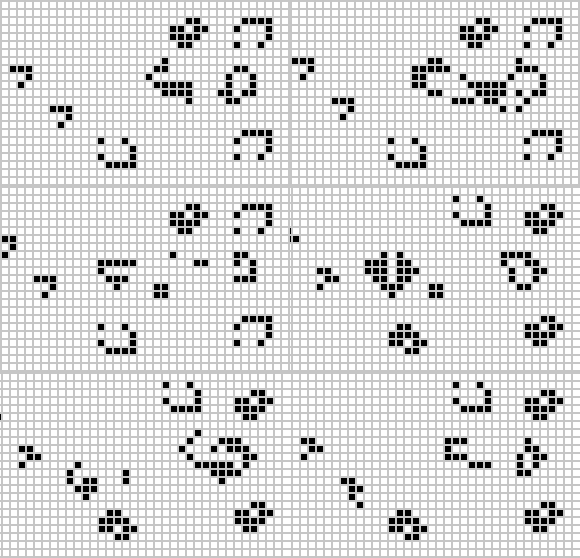

Space rake is a period 20 forward glider rake constructed no later than 1971,[1] probably by Bill Gosper; it was the first known rake. It consists of an ecologist with a lightweight spaceship added to turn its dying debris into gliders.
Note that if the back lightweight spaceship is flipped vertically and moved down by one cell, then this becomes a period 20 backward glider rake, as shown below.[2]
| The backward version of the space rake (click above to open LifeViewer) RLE: here Plaintext: here |
References
- ↑ Robert Wainwright (September 1971). Lifeline, vol 3, page 7.
- ↑ Alan Hensel's lifep.zip pattern collection.
External links
- Space rake at the Life Lexicon