Very long clock
| Very long clock | |||||||||
| View animated image | |||||||||
| View static image | |||||||||
| Pattern type | Oscillator | ||||||||
|---|---|---|---|---|---|---|---|---|---|
| Oscillator type | Muttering moat | ||||||||
| Family | Clock | ||||||||
| Number of cells | 30 | ||||||||
| Bounding box | 12 × 8 | ||||||||
| Period | 2 (mod: 2) | ||||||||
| Heat | 24 | ||||||||
| Volatility | 0.57 | 0.57 | ||||||||
| Kinetic symmetry | Unspecified | ||||||||
| Discovered by | Unknown | ||||||||
| Year of discovery | Unknown | ||||||||
| |||||||||
| |||||||||
| |||||||||
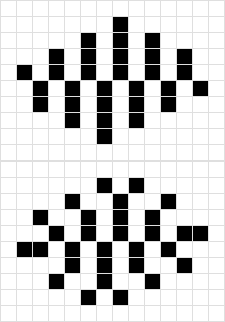

Very long clock is the clock of length 2. It is technically a stabilization of an Agar.
See also
External links
- 30P2.18121 at Heinrich Koenig's Game of Life Object Catalogs
Categories:
- Patterns
- Oscillators with 30 cells
- Periodic objects with minimum population 30
- Patterns with 30 cells
- Oscillators
- Clock variants
- Muttering moats
- Oscillators with period 2
- Oscillators with mod 2
- Oscillators with heat 24
- Oscillators with volatility 0.57
- Oscillators with strict volatility 0.57
- Patterns with 180-degree rotation symmetry