Max

From LifeWiki
Revision as of 22:25, 22 June 2009 by Elithrion (talk | contribs) (typo fix)
Jump to navigation Jump to search
Max
x = 27, y = 27, rule = B3/S23 18bo$17b3o$12b3o4b2o$11bo2b3o2bob2o$10bo3bobo2bobo$10bo4bobobobob2o$ 12bo4bobo3b2o$4o5bobo4bo3bob3o$o3b2obob3ob2o9b2o$o5b2o5bo$bo2b2obo2bo 2bob2o$7bobobobobobo5b4o$bo2b2obo2bo2bo2b2obob2o3bo$o5b2o3bobobo3b2o5b o$o3b2obob2o2bo2bo2bob2o2bo$4o5bobobobobobo$10b2obo2bo2bob2o2bo$13bo5b 2o5bo$b2o9b2ob3obob2o3bo$2b3obo3bo4bobo5b4o$2b2o3bobo4bo$2b2obobobobo 4bo$5bobo2bobo3bo$4b2obo2b3o2bo$6b2o4b3o$7b3o$8bo! #C [[ THUMBSIZE 2 THEME 6 GRID GRIDMAJOR 0 SUPPRESS THUMBLAUNCH ]]
Pattern type Spacefiller
Number of cells 206
Bounding box 29 × 43
Static symmetry Unspecified
Discovered by David Bell
Year of discovery 1993

Max is a spacefiller that was found by David Bell in September 1993. It was at one time the smallest known spacefiller, but it has since been surpassed by spacefiller 1. Alternatively, the term Max may be used to describe whatever the smallest-known spacefiller is at the current time, the term representing the fact that the growth rate is the fastest possible of any pattern in Conway's Game of Life.[1][2]

Its population in generation t is [(t+19)2+463]/4 if t = 0 (mod 4), [(t+19)2+487]/4 if t = 2 (mod 4), and [(t+18)2+639]/4 if t is odd. The top and bottom stretchers were created by Hartmut Holzwart, size optimization and the left and right stretchers were created by David Bell, and the original idea, middle part, and left/right stretcher connection were created by Alan Hensel.[3]
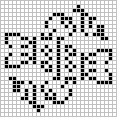
Max at generation 50

See also

References

  1. ↑ "Max". The Life Lexicon. Stephen Silver. Retrieved on May 24, 2009.
  2. ↑ Eric Weisstein. "Max". Eric Weisstein's Treasure Trove of Life C.A.. Retrieved on May 24, 2009.
  3. ↑ MAX.lif in Alan Hensel's lifep.zip pattern collection.