Pulsar Pixel Display

|
This page does not link to a downloadable pattern file.
If you have access to this pattern in RLE format (or any other common file format), please add it to the RLE namespace or post it in this forum thread. Consider checking Google and other pattern archives for a copy of this pattern. |
| Pulsar Pixel Display | |||||||
| |||||||
| View static image | |||||||
| Pattern type | Miscellaneous | ||||||
|---|---|---|---|---|---|---|---|
| Number of cells | 118753 | ||||||
| Bounding box | 7170 × 3935 | ||||||
| Static symmetry | Unspecified | ||||||
| Discovered by | Mark Walsh | ||||||
| Year of discovery | 2011 | ||||||
| |||||||
| |||||||

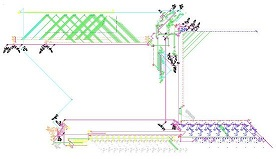
The Pulsar Pixel Display (PPD) is a large-scale raster line display device completed by Mark Walsh in August 2011,[1] where pulsars form the individual pixels in an otherwise empty grid. The published sample pattern displays and erases eight 7×5-pixel characters on each of two lines of text.
References
- ↑ Mark Walsh (August 3, 2011). Re: triller's p30 thread (discussion thread) at the ConwayLife.com forums
External links
- Pulsar Pixel Display at the Life Lexicon