Max

From LifeWiki
Revision as of 11:48, 23 April 2020 by Calcyman (talk | contribs) (s/Mateon1/Mateusz Naściszewski/g)
Jump to navigation Jump to search
Max
x = 27, y = 27, rule = B3/S23 18bo$17b3o$12b3o4b2o$11bo2b3o2bob2o$10bo3bobo2bobo$10bo4bobobobob2o$ 12bo4bobo3b2o$4o5bobo4bo3bob3o$o3b2obob3ob2o9b2o$o5b2o5bo$bo2b2obo2bo 2bob2o$7bobobobobobo5b4o$bo2b2obo2bo2bo2b2obob2o3bo$o5b2o3bobobo3b2o5b o$o3b2obob2o2bo2bo2bob2o2bo$4o5bobobobobobo$10b2obo2bo2bob2o2bo$13bo5b 2o5bo$b2o9b2ob3obob2o3bo$2b3obo3bo4bobo5b4o$2b2o3bobo4bo$2b2obobobobo 4bo$5bobo2bobo3bo$4b2obo2b3o2bo$6b2o4b3o$7b3o$8bo! #C [[ THUMBSIZE 2 THEME 6 GRID GRIDMAJOR 0 SUPPRESS THUMBLAUNCH ]]
Pattern type Spacefiller
Number of cells 187
Bounding box 27 × 27
Static symmetry Unspecified
Discovered by Tim Coe
Year of discovery 1995

Max is a spacefiller that was found by Tim Coe[1] in October 1995 that fills the plane with zebra stripes. In terms of its 187 cells, it was formerly tied with spacefiller 2 as the smallest known spacefiller, and in terms of its 27×27 bounding box it was the outright smallest for many years.[2]

In February 2020, Alex Greason and Adam P. Goucher found 26×26 and 25×25 predecessors to Max that improved on the bounding box at the cost of increased population.[3][4] In April, Mateusz Naściszewski found a 25×25 predecessor with a population of only 215,[5] as well as a Max variant with a 27×27 bounding box but a population of only 183 cells.[6]

x = 25, y = 25, rule = B3/S23 6bo5bo3b3o2bo$7bob4obo2b2o2b3o$8b2ob2o2bo3bob2o$9bo4b3obo3bo$6bo7bobob obobobo$bo2bo3bo3b3obo2b5o$o4b3o2bo2bo2bo$o2bobob4o2bobo3bo3b2o$3ob2o 7bo$3bo2b4obo3bo2bo4bo$6bobobo2bo2bo7bo$3bo2b5obobobo2bobo2bo$3ob2o6bo 6b2ob3o$o2bobo2bobobob5o2bo$o7bo2bo2bobobo$bo4bo2bo3bob4o2bo$11bo7b2ob 3o$2o3bo3bobo2b4obobo2bo$8bo2bo2bo2b3o4bo$b5o2bob3o3bo3bo2bo$obobobobo bo7bo$2bo3bob3o4bo$2b2obo3bo2b2ob2o$b3o2b2o2bob4obo$3bo2b3o3bo5bo! #C [[ THUMBSIZE 2 THEME 6 GRID GRIDMAJOR 0 SUPPRESS THUMBLAUNCH ]] #C [[ THUMBLAUNCH THUMBSIZE 2 ]]
A smaller but higher-population grandparent
of the Max spacefiller, by Mateusz Naściszewski

(click above to open LifeViewer)
RLE: here Plaintext: here
x = 27, y = 27, rule = B3/S23 18bo$17b3o$12b3o4b2o$11bo2b3o2bob2o$10bo3bobo2bobo$10bo4bobobobob2o$ 12bo4bobo3b2o$4obobobobo4bo3bob3o$o3bo4b3ob2o9b2o$o5b2o3bobo$bo2bo4b2o 3b2o$8b2obobobobobobob4o$bo2bo4b2o2bo2b2o4bo3bo$o5b2o3bobobo3b2o5bo$o 3bo4b2o2bo2b2o4bo2bo$4obobobobobobob2o$11b2o3b2o4bo2bo$13bobo3b2o5bo$b 2o9b2ob3o4bo3bo$2b3obo3bo4bobobobob4o$2b2o3bobo4bo$2b2obobobobo4bo$5bo bo2bobo3bo$4b2obo2b3o2bo$6b2o4b3o$7b3o$8bo! #C [[ THUMBSIZE 2 THEME 6 GRID GRIDMAJOR 0 SUPPRESS THUMBLAUNCH ]] #C [[ THUMBLAUNCH THUMBSIZE 2 ]]
183-cell Max variant, by Mateusz Naściszewski

(click above to open LifeViewer)
RLE: here Plaintext: here

Alternatively, the term Max may be used to describe whatever the smallest-known spacefiller is at the current time. The term represents the fact that the growth rate is the fastest possible of any pattern in Conway's Game of Life.[7]
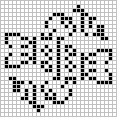
Max at generation 50

See also

References

  1. ↑ "Coe's improvements on the spacefiller". Paul Callahan. Retrieved on June 10, 2011.
  2. ↑ Spacefiller.lif in Alan Hensel's lifebc.zip pattern collection.
  3. ↑ Alex Greason (February 15, 2020). Message in #cgol on the Conwaylife Lounge Discord server
  4. ↑ Adam P. Goucher (February 16, 2020). Message in #cgol on the Conwaylife Lounge Discord server
  5. ↑ Mateusz Naściszewski (April 16, 2020). Message in #cgol on the Conwaylife Lounge Discord server
  6. ↑ Mateusz Naściszewski (April 17, 2020). Message in #cgol on the Conwaylife Lounge Discord server
  7. ↑ "Max". The Life Lexicon. Stephen Silver. Retrieved on May 24, 2009.