Bi-block: Difference between revisions
Jump to navigation
Jump to search
No edit summary |
No edit summary |
||
| Line 14: | Line 14: | ||
==External links== | ==External links== | ||
{{LinkLexicon|lex_b.htm#biblock}} | {{LinkLexicon|lex_b.htm#biblock}} | ||
{{Symmetry|orthogonal4}} | |||
Revision as of 19:18, 29 March 2016
| Bi-block | |||||||
| View static image | |||||||
| Pattern type | Pseudo still life | ||||||
|---|---|---|---|---|---|---|---|
| Number of cells | 8 | ||||||
| Bounding box | 5 × 2 | ||||||
| Static symmetry | Unspecified | ||||||
| Discovered by | Unknown | ||||||
| Year of discovery | Unknown | ||||||
| |||||||
| |||||||
| |||||||
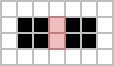
The bi-block is a common formation of two blocks and the smallest and most common[1] pseudo still life. Similar pseudo still lifes can be formed by considering any rectangular array of blocks, some of which are shown below.
Image gallery
 RLE: here |

References
- ↑ "Census Results in Conway's Game of Life". Online Life-Like CA Soup Search. Retrieved on July 12, 2009.
External links
- Bi-block at the Life Lexicon