Cauldron: Difference between revisions
Jump to navigation
Jump to search
synth reduction |
Neocaridina (talk | contribs) No edit summary |
||
| Line 17: | Line 17: | ||
|rulemin = B3/S23 | |rulemin = B3/S23 | ||
|rulemax = B378/S23678 | |rulemax = B378/S23678 | ||
|isorulemin = B3eiry/S2-n3-aj | |isorulemin = B3eiry/S2-n3-aj | ||
|isorulemax = B2n34ackz5acin6c78/S1c234-int5-e678 | |isorulemax = B2n34ackz5acin6c78/S1c234-int5-e678 | ||
Latest revision as of 16:07, 13 February 2026
| Cauldron | |||||||||||||||
| View animated image | |||||||||||||||
| View static image | |||||||||||||||
| Pattern type | Oscillator | ||||||||||||||
|---|---|---|---|---|---|---|---|---|---|---|---|---|---|---|---|
| Oscillator type | Billiard table | ||||||||||||||
| Number of cells | 32 | ||||||||||||||
| Bounding box | 11 × 13 | ||||||||||||||
| Period | 8 (mod: 8) | ||||||||||||||
| Heat | 2.8 | ||||||||||||||
| Volatility | 0.20 | 0.18 | ||||||||||||||
| Kinetic symmetry | n | ||||||||||||||
| Discovered by | Robert Wainwright Don Woods | ||||||||||||||
| Year of discovery | 1971 | ||||||||||||||
| |||||||||||||||
| |||||||||||||||
| |||||||||||||||
| |||||||||||||||
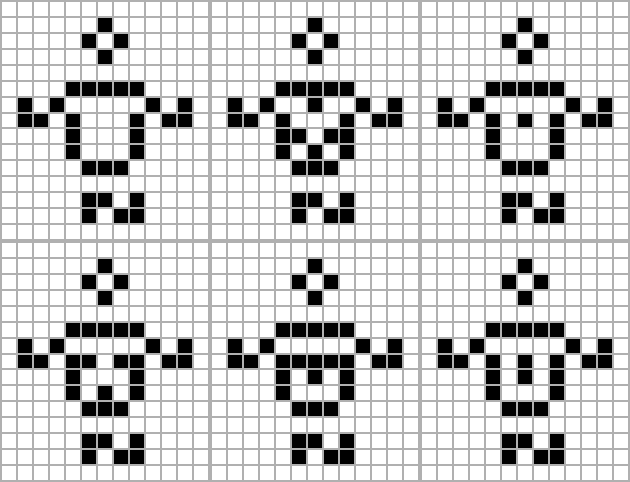
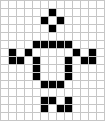
Cauldron (or crucible[1]) is a period-8 billiard table oscillator that was found in 1971 independently by Don Woods and Robert Wainwright.[2][3] A 24-glider synthesis is known for a variation of this oscillator with a slightly larger stator.
See also
References
- ↑ "Cauldron". The Life Lexicon. Stephen Silver. Retrieved on December 3, 2018.
- ↑ Robert Wainwright (September 1971). Lifeline, vol 3, page 3.
- ↑ Dean Hickerson's oscillator stamp collection. Retrieved on March 14, 2020.
External links
- Cauldron at the Life Lexicon
- 32P8.1 at Heinrich Koenig's Game of Life Object Catalogs
Categories:
- Patterns
- Oscillators with 32 cells
- Periodic objects with minimum population 32
- Patterns with 32 cells
- Patterns found by Robert Wainwright
- Patterns found by Don Woods
- Patterns found in 1971
- Patterns that can be constructed with 35 gliders
- Patterns that can be constructed with 24 gliders
- Oscillators
- Billiard tables
- Oscillators with period 8
- Oscillators with mod 8
- Oscillators with heat 2
- Oscillators with volatility 0.20
- Oscillators with strict volatility 0.18
- Oscillators with n symmetry