Cauldron: Difference between revisions
Jump to navigation
Jump to search
replaced ref with external link due to issues with formatting long apgcodes |
→External links: removed Template:LinkWeisstein per tiki bar discussion using AutoWikiBrowser |
||
| Line 38: | Line 38: | ||
==External links== | ==External links== | ||
{{LinkLexicon|filename=lex_c.htm#cauldron}} | {{LinkLexicon|filename=lex_c.htm#cauldron}} | ||
{{LinkCatagolue|xp8_xgba9jz624b888b426zy0252}} | {{LinkCatagolue|xp8_xgba9jz624b888b426zy0252}} | ||
{{LinkPentadecathlonObject|32P8.1}} | {{LinkPentadecathlonObject|32P8.1}} | ||
Revision as of 01:36, 3 December 2020
| Cauldron | |||||||||||
| View animated image | |||||||||||
| View static image | |||||||||||
| Pattern type | Oscillator | ||||||||||
|---|---|---|---|---|---|---|---|---|---|---|---|
| Oscillator type | Billiard table | ||||||||||
| Number of cells | 32 | ||||||||||
| Bounding box | 11 × 13 | ||||||||||
| Period | 8 (mod: 8) | ||||||||||
| Heat | 2.8 | ||||||||||
| Volatility | 0.20 | 0.18 | ||||||||||
| Kinetic symmetry | Unspecified | ||||||||||
| Discovered by | Robert Wainwright Don Woods | ||||||||||
| Year of discovery | 1971 | ||||||||||
| |||||||||||
| |||||||||||
| |||||||||||
| |||||||||||
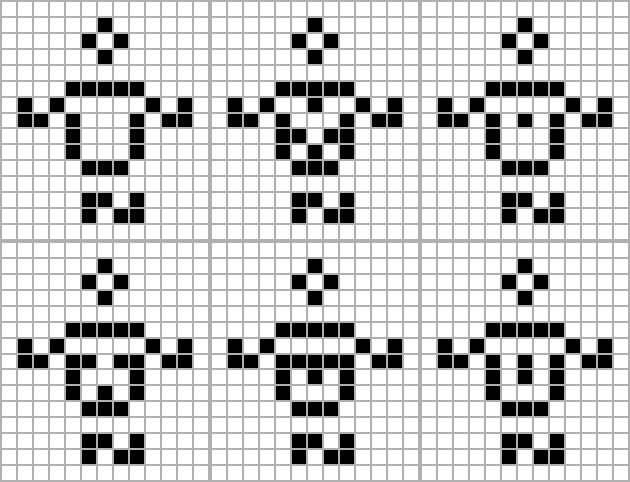
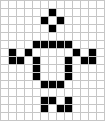
Cauldron (or crucible[1]) is a period-8 billiard table oscillator that was found in 1971 independently by Don Woods and Robert Wainwright.[2] A 24-glider synthesis is known for a variation of this oscillator with a slightly larger stator.
See also
References
- ↑ "Cauldron". The Life Lexicon. Stephen Silver. Retrieved on December 3, 2018.
- ↑ Dean Hickerson's oscillator stamp collection. Retrieved on March 14, 2020.
External links
- Cauldron at the Life Lexicon
- 32P8.1 at Heinrich Koenig's Game of Life Object Catalogs
Categories:
- Patterns
- Oscillators with 32 cells
- Periodic objects with minimum population 32
- Patterns with 32 cells
- Patterns found by Robert Wainwright
- Patterns found by Don Woods
- Patterns found in 1971
- Patterns that can be constructed with 39 gliders
- Oscillators
- Billiard tables
- Oscillators with period 8
- Oscillators with mod 8
- Oscillators with heat 2
- Oscillators with volatility 0.20
- Oscillators with strict volatility 0.18