Puffer 1: Difference between revisions
Jump to navigation
Jump to search
m apgcode |
m {{seminatural}} |
||
| Line 30: | Line 30: | ||
{{Symmetry|orthogonal2}} | {{Symmetry|orthogonal2}} | ||
{{seminatural}} | |||
Revision as of 00:58, 8 June 2019
| Puffer 1 | |||||||
| View static image | |||||||
| Pattern type | Puffer | ||||||
|---|---|---|---|---|---|---|---|
| Number of cells | 44 | ||||||
| Bounding box | 27 × 7 | ||||||
| Direction | Orthogonal | ||||||
| Period | 128 | ||||||
| Speed | c/2 | ||||||
| Discovered by | Bill Gosper | ||||||
| Year of discovery | 1971 | ||||||
| |||||||
| |||||||
Puffer 1 was the first puffer to be found, and was discovered by Bill Gosper in 1971. The debris that it leaves behind are groups of four blinkers and a pair of bookends, as shown below. The debris can be cleaned up and converted into gliders to create a rake as in backrake 3.
Image gallery
-
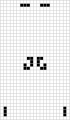 Debris left behind by puffer 1


See also
External links
- Puffer 1 at the Life Lexicon