Gaussian-weighted rules now work in LifeViewer

For discussion of other cellular automata.
User avatar
martin.novy
Posts: 142
Joined: October 22nd, 2014, 6:22 am
Location: Czechia, EU
Contact:

Gaussian-weighted rules now work in LifeViewer

Post by martin.novy »

EDIT in August:
Gaussian-weighted neighbourhood is now supported in LifeViewer

https://www.conwaylife.com/forums/viewt ... 75#p102131
https://www.conwaylife.com/forums/viewt ... 50#p101003

Code: Select all

x = 126, y = 129, rule = R2,C2,S31-48,B24-38,NG
110$13b2o$12b3o$12b3o$13b2o!
-------------------------------------------

The first Gaussian-weighted LtL rules that have natural spaceships

The rule is based on these weights

1 2 3 2 1
2 4 6 4 2
3 6 9 6 3
2 4 6 4 2
1 2 3 2 1

The rule can be efficiently computed by summing by the uniform filter *twice* , and only then thresholding

1 1 1
1 1 1
1 1 1

1 1 1
1 1 1
1 1 1

So, in HROT notation:

R2,
C0,
B24-38, // the 38 can be replaced by 36, 37, or 39
S31-48,
NG

I would like to try later to adjust the parameters
Range,
Bmin-Bmax,
Smin-Smax
to find better GoL-like behavior.

old work: https://github.com/martin12333/PyMartinCA

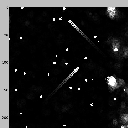
The image is actually a parameter map with varying parameters
B24-[36..39]
S31-[47..49]
Trails in the image are merely a visualization aid that emphasizes spaceships.


I will have to search the forums: has anyone already studied weighted LtL rules, and/or the repeated application of the uniform filter?


Edit: A bit of discussion has happened at https://www.reddit.com/r/cellular_autom ... that_have/

gEN4uGa.png
gEN4uGa.png (222.99 KiB) Viewed 940 times
Last edited by martin.novy on August 13th, 2020, 8:36 am, edited 10 times in total.
wildmyron
Posts: 1571
Joined: August 9th, 2013, 12:45 am
Location: Western Australia

Re: The first(?) Gaussian-weighted LtL rules that have natural spaceships

Post by wildmyron »

Welcome to the forums. The parameter maps in this and your other posts are a nice visualisation for exploring different rulespaces. Nicely done. I believe there have been other people who have used similar approaches, but what I'm aware of has been in the academic field - I don't recall that type of approach being discussed here.on the forum.

The weighted LtL rulespaces is interesting, particularly in the choice of distribution for weights. Again, there's not been much discussion of that type of rules here, but there are/were some people here who have explored rules with higher range weighted neighbourhoods. And if you explore the archives you'll find discussions about a wplethora of different neighbourhoods. There not many tools commonly used by the regular members here capable of exploring those rule spaces, but two that come to mind are bprentice's Java Square Cell (only up to range 2) and IIRC, Visions of Chaos. I can't find a relevant post by bprentice, but I posted some details about range 2 rules in JSC here: https://conwaylife.com/forums/viewtopic ... 403#p65403 You would need to increase the Counts parameter to be able to simulate these rules, and I can't remember what the max weight is. As for VoC, I can't remember which mode allows setting weights for higher range neighbourhoods, so I may very well be wrong on that option.

It seems very unlikely that anyone has explored the particular rulespaces you've picked out using the same weights as you did - the number of possible rules - and even the number of possible neighbourhoods - is just so enormously vast.
The 5S project (Smallest Spaceships Supporting Specific Speeds) is now maintained by AforAmpere. The latest collection is hosted on GitHub and contains well over 1,000,000 spaceships.

Semi-active here - recovering from a severe case of LWTDS.
User avatar
martin.novy
Posts: 142
Joined: October 22nd, 2014, 6:22 am
Location: Czechia, EU
Contact:

Re:

Post by martin.novy »

@wildmyron , I would like to thank you several times.
bprentice
Posts: 920
Joined: September 10th, 2009, 6:20 pm
Location: Coos Bay, Oregon

Re: The first(?) Gaussian-weighted LtL rules that have natural spaceships

Post by bprentice »

A new version of Square Cell is here:

http://bprentice.webenet.net/Square%20C ... 20Cell.zip

Directory "../patterns/Set 8/Rule Table/Rule 028" contains example patterns of a Generations rule that uses the Gaussian weighted neighborhood.

The rule was randomly generated and is defined by the dialog:

Rule.png
Rule.png (160.95 KiB) Viewed 7896 times

The example patterns include a replicator, two guns and some oscillators and ships. There is much more to be discovered in this rule.

The directory "../patterns/Set 8/Rule Table" contains patterns from other rules that may be of interest. For example Rule 002 is an omniperiodic variant of Wire World.

Brian Prentice
Last edited by bprentice on March 15th, 2020, 5:16 pm, edited 1 time in total.
User avatar
martin.novy
Posts: 142
Joined: October 22nd, 2014, 6:22 am
Location: Czechia, EU
Contact:

Re: Square Cell

Post by martin.novy »

@bprentice That's wonderful!
I am going to install Java.
bprentice
Posts: 920
Joined: September 10th, 2009, 6:20 pm
Location: Coos Bay, Oregon

Re: The first(?) Gaussian-weighted LtL rules that have natural spaceships

Post by bprentice »

martin.novy,

Have you continued to explore the Gaussian weighted neighborhood?

The archive here:

http://bprentice.webenet.net/Square%20C ... 20Cell.zip

has been updated to include 20 new rules ("../patterns/Set 8/Rule Table/Rule 28" thru "../patterns/Set 8/Rule Table/Rule 47"). All of them exhibit interesting behavior despite the use by some rules of unusual state weight sequences. New rules are very easy to find using the "test random rule" feature of Square Cell.

Brian Prentice
User avatar
martin.novy
Posts: 142
Joined: October 22nd, 2014, 6:22 am
Location: Czechia, EU
Contact:

Re: The first(?) Gaussian-weighted LtL rules that have natural spaceships

Post by martin.novy »

I am happy that you like Gaussian rules.

One of my CA hopes is, that there exist Gaussian rules comparable to the GoL.

But, if they really exist, how to find them?

I thought I should first try the unweighted LtL rules of range 2: how the zone with natural spaceships could look like in the parameter space? My results are at https://conwaylife.com/forums/viewtopic.php?f=11&t=4346

I will write more later.
bprentice
Posts: 920
Joined: September 10th, 2009, 6:20 pm
Location: Coos Bay, Oregon

Re: The first(?) Gaussian-weighted LtL rules that have natural spaceships

Post by bprentice »

The collection of Square Cell rules that use the Gaussian weighted neighborhood continues to grow. There are now 33 rules (Rule 28 thru Rule 60) in directory:

"../patterns/Set 8/Rule Table"

which can be obtained from:

http://bprentice.webenet.net/Square%20C ... 20Cell.zip

Example patterns for each rule illustrate their unusual behavior and rhythms.

Brian Prentice
User avatar
martin.novy
Posts: 142
Joined: October 22nd, 2014, 6:22 am
Location: Czechia, EU
Contact:

Re: The first(?) Gaussian-weighted LtL rules that have natural spaceships

Post by martin.novy »

bprentice wrote: March 25th, 2020, 8:32 am The collection of Square Cell rules that use the Gaussian weighted neighborhood continues to grow. There are now 33 rules (Rule 28 thru Rule 60)
are there any rules that are 2-state or Generations and "single-interval" birth and "single-interval" survival?

"single-interval" ... like the LtL, and like my first Gaussian

... I mean something like
if state is 0 and the weighted sum is 24..38 then state 1 else state 0 end
elseif state is 1 and the weighted sum is 31..48 then state 1 else state 2 end
elseif state is 2 then state 0 end
end

?
User avatar
martin.novy
Posts: 142
Joined: October 22nd, 2014, 6:22 am
Location: Czechia, EU
Contact:

Re: The first(?) Gaussian-weighted LtL rules that have natural spaceships

Post by martin.novy »

@bprentice :
If I understand correctly, I can express my rules in .sqc files ?
bprentice
Posts: 920
Joined: September 10th, 2009, 6:20 pm
Location: Coos Bay, Oregon

Re: The first(?) Gaussian-weighted LtL rules that have natural spaceships

Post by bprentice »

Square Cell can be extended in two ways. The first way is to add a new rule family which requires the coding of an extension to the rule class and of classes to display and obtain rule parameters and options. The second way is to write an extension to the Base program. There are currently 35 such extensions, Larger than Life is one of those. All of these are included in the achieve:

http://bprentice.webenet.net/Java%20Squ ... ograms.zip

A Java programmer could easily modify the Larger than Life extension to include the Gaussian weighted neighborhood.

All of the rules that I have explored recently were specified using the following two dialogs:

d1.png
d1.png (150.01 KiB) Viewed 7461 times

d2.png
d2.png (51.44 KiB) Viewed 7461 times

and use the following step code:

Code: Select all

  public int step(int r, int c)
  {
    int cell = squareCell.getNeighbor(r, c);
    int count =
      stateWeights[squareCell.getNeighbor(r - 2, c - 2)] * neighborWeights[0][0] +
      stateWeights[squareCell.getNeighbor(r - 2, c - 1)] * neighborWeights[0][1] +
      stateWeights[squareCell.getNeighbor(r - 2, c    )] * neighborWeights[0][2] +
      stateWeights[squareCell.getNeighbor(r - 2, c + 1)] * neighborWeights[0][3] +
      stateWeights[squareCell.getNeighbor(r - 2, c + 2)] * neighborWeights[0][4] +

      stateWeights[squareCell.getNeighbor(r - 1, c - 2)] * neighborWeights[1][0] +
      stateWeights[squareCell.getNeighbor(r - 1, c - 1)] * neighborWeights[1][1] +
      stateWeights[squareCell.getNeighbor(r - 1, c    )] * neighborWeights[1][2] +
      stateWeights[squareCell.getNeighbor(r - 1, c + 1)] * neighborWeights[1][3] +
      stateWeights[squareCell.getNeighbor(r - 1, c + 2)] * neighborWeights[1][4] +

      stateWeights[squareCell.getNeighbor(r    , c - 2)] * neighborWeights[2][0] +
      stateWeights[squareCell.getNeighbor(r    , c - 1)] * neighborWeights[2][1] +
      stateWeights[cell                                ] * neighborWeights[2][2] +
      stateWeights[squareCell.getNeighbor(r    , c + 1)] * neighborWeights[2][3] +
      stateWeights[squareCell.getNeighbor(r    , c + 2)] * neighborWeights[2][4] +

      stateWeights[squareCell.getNeighbor(r + 1, c - 2)] * neighborWeights[3][0] +
      stateWeights[squareCell.getNeighbor(r + 1, c - 1)] * neighborWeights[3][1] +
      stateWeights[squareCell.getNeighbor(r + 1, c    )] * neighborWeights[3][2] +
      stateWeights[squareCell.getNeighbor(r + 1, c + 1)] * neighborWeights[3][3] +
      stateWeights[squareCell.getNeighbor(r + 1, c + 2)] * neighborWeights[3][4] +

      stateWeights[squareCell.getNeighbor(r + 2, c - 2)] * neighborWeights[4][0] +
      stateWeights[squareCell.getNeighbor(r + 2, c - 1)] * neighborWeights[4][1] +
      stateWeights[squareCell.getNeighbor(r + 2, c    )] * neighborWeights[4][2] +
      stateWeights[squareCell.getNeighbor(r + 2, c + 1)] * neighborWeights[4][3] +
      stateWeights[squareCell.getNeighbor(r + 2, c + 2)] * neighborWeights[4][4];
    if ((count >= 0) && (count < noCounts))
    {
      useTable[cell][count] = 1;
      return ruleTable[cell][count];
    }
    return 0;
  }
Brian Prentice
User avatar
martin.novy
Posts: 142
Joined: October 22nd, 2014, 6:22 am
Location: Czechia, EU
Contact:

Re: The first(?) Gaussian-weighted LtL rules that have natural spaceships

Post by martin.novy »

@bprentice :
is keyboard important in the GUI of SquareCell ?

I mean: are there any functions accessible only by keyboard and not by mouse?
In the dialogs??

so far I know about:
Ctrl - ... zoom-out
bprentice
Posts: 920
Joined: September 10th, 2009, 6:20 pm
Location: Coos Bay, Oregon

Re: The first(?) Gaussian-weighted LtL rules that have natural spaceships

Post by bprentice »

martin.novy wrote: March 27th, 2020, 6:40 am is keyboard important in the GUI of SquareCell ?
Yes, a full keyboard including a number pad is required to control all the features of Square Cell.

A brief user guide is here:

http://bprentice.webenet.net/Square%20C ... 0Cell.html

The + - keys mentioned are on the number pad.

The current rule families supported are shown here:

d1.png
d1.png (83.14 KiB) Viewed 7388 times

To fully understand these rule families and the 35 Square Cell extensions mentioned in my previous post, the step code in the rule class and the parameter dialog and options dialog code should be read.

Most of the 35 Square Cell extensions have been discussed in this forum.

Brian Prentice
User avatar
martin.novy
Posts: 142
Joined: October 22nd, 2014, 6:22 am
Location: Czechia, EU
Contact:

Re: The first(?) Gaussian-weighted LtL rules that have natural spaceships

Post by martin.novy »

now I discovered Ctrl+CLICK

EDIT:
Selected cells do not participate when the simulation is run and thus selections may be used for temporary storage and pattern synchronization.
now I understand
Last edited by martin.novy on March 27th, 2020, 10:38 am, edited 1 time in total.
User avatar
martin.novy
Posts: 142
Joined: October 22nd, 2014, 6:22 am
Location: Czechia, EU
Contact:

SquareCell xgauss9/r2b24t38s31t48.sqc

Post by martin.novy »

Code: Select all

#Rule = Rule Table
#States = 2
#Counts = 82
#SW 0,1
#NW 1,2,3,2,1
#NW 2,4,6,4,2
#NW 3,6,9,6,3
#NW 2,4,6,4,2
#NW 1,2,3,2,1
#RT 0,0,0,0,0,0,0,0,0,0,0,0,0,0,0,0,0,0,0,0,0,0,0,0,1,1,1,1,1,1,1,1,1,1,1,1,1,1,1,0,0,0,0,0,0,0,0,0,0,0,0,0,0,0,0,0,0,0,0,0,0,0,0,0,0,0,0,0,0,0,0,0,0,0,0,0,0,0,0,0,0,0
#RT 0,0,0,0,0,0,0,0,0,0,0,0,0,0,0,0,0,0,0,0,0,0,0,0,0,0,0,0,0,0,0,1,1,1,1,1,1,1,1,1,1,1,1,1,1,1,1,1,1,0,0,0,0,0,0,0,0,0,0,0,0,0,0,0,0,0,0,0,0,0,0,0,0,0,0,0,0,0,0,0,0,0
#Rows = 4
#Columns = 4
#L .3A$2A$2A$.3A
User avatar
martin.novy
Posts: 142
Joined: October 22nd, 2014, 6:22 am
Location: Czechia, EU
Contact:

Java Square Cell cheatsheet

Post by martin.novy »

bprentice
Posts: 920
Joined: September 10th, 2009, 6:20 pm
Location: Coos Bay, Oregon

Re: The first(?) Gaussian-weighted LtL rules that have natural spaceships

Post by bprentice »

martin.novy,

viewtopic.php?f=11&t=4347#p92509

Nice!

A simple gun from a 2 state rule that was found by pressing the 'n' key a few times:

Code: Select all

#Rule = Rule Table
#States = 2
#Counts = 82
#SW 0,1
#NW 1,2,3,2,1
#NW 2,4,6,4,2
#NW 3,6,9,6,3
#NW 2,4,6,4,2
#NW 1,2,3,2,1
#RT 0,0,0,0,0,1,0,0,0,0,0,0,0,0,0,0,0,0,0,0,0,0,0,0,0,0,0,0,0,0,0,0,0,0,0,0,0,0,1,0,0,0,0,0,0,0,0,0,0,0,0,0,0,0,0,0,0,0,0,0,1,0,0,0,0,0,0,0,0,1,0,0,0,0,0,0,0,0,0,1,1,0
#RT 0,0,0,1,0,0,0,0,0,0,0,0,0,0,0,1,0,0,1,0,0,0,0,0,0,1,0,0,0,0,0,0,0,0,0,0,1,0,0,0,0,0,0,0,0,0,0,0,1,0,0,1,0,0,0,0,1,0,0,0,0,1,0,0,0,0,0,0,0,1,0,1,0,0,0,0,0,0,1,0,0,0
#Rows = 31
#Columns = 26
#L A$.A$17.A2$13.A3.A3.A$13.A3.A3.A2$17.A2$22.2A4$20.A.2A.A4$22.2A12$19.
#L A$18.A
The rule also supports an assortment of small ships, a replicator, and several oscillators and puffers.

Brian Prentice
bprentice
Posts: 920
Joined: September 10th, 2009, 6:20 pm
Location: Coos Bay, Oregon

Re: The first(?) Gaussian-weighted LtL rules that have natural spaceships

Post by bprentice »

A nice 4 barrel knight ship gun:

Code: Select all

#Rule = Rule Table
#States = 7
#Counts = 82
#SW 0,-2,-1,3,3,-1,-2
#NW 1,2,3,2,1
#NW 2,4,6,4,2
#NW 3,6,9,6,3
#NW 2,4,6,4,2
#NW 1,2,3,2,1
#RT 0,0,2,0,0,3,0,2,0,0,0,0,2,6,0,0,0,0,0,0,0,0,0,0,0,0,0,0,6,0,6,0,0,6,0,0,6,0,0,1,0,0,0,0,3,0,6,6,0,0,0,0,0,5,1,0,0,6,0,0,0,0,0,0,0,0,2,0,0,0,0,0,0,0,0,0,2,0,0,0,0,5
#RT 0,0,0,2,0,0,0,0,0,0,0,0,3,4,0,0,0,0,0,0,0,6,0,0,0,0,0,0,0,0,0,0,5,0,5,0,0,2,0,0,1,6,0,0,0,0,3,0,3,2,5,0,0,0,0,0,0,0,1,0,0,0,0,0,0,0,0,1,0,0,0,0,0,0,5,0,0,0,0,0,0,0
#RT 0,5,0,0,0,0,0,0,0,0,0,0,4,0,2,0,5,2,0,1,3,0,0,0,0,0,4,0,0,0,0,0,0,1,0,0,0,0,0,0,0,6,0,0,0,0,0,0,0,0,0,0,0,0,0,0,2,5,0,0,5,5,0,0,0,0,0,0,0,3,0,0,0,4,0,0,0,2,0,0,0,3
#RT 0,0,0,0,0,0,0,0,0,0,0,0,0,0,0,0,0,0,4,0,0,0,0,1,6,0,2,0,0,0,5,0,2,3,0,1,5,0,6,0,4,0,0,1,1,0,3,0,0,0,0,0,0,5,0,0,0,0,0,0,0,0,0,0,0,0,2,0,0,0,2,0,0,0,0,0,0,4,0,0,0,0
#RT 0,0,1,0,0,1,0,0,0,0,0,4,0,0,1,2,0,0,3,0,0,0,2,0,0,0,0,0,0,0,0,0,0,0,0,0,0,0,0,5,0,4,0,0,2,0,2,0,0,0,0,0,6,0,2,0,0,0,0,0,0,0,0,0,0,0,0,0,0,0,0,0,0,0,0,5,0,0,0,0,0,3
#RT 3,0,0,0,0,0,0,0,5,0,0,5,0,0,0,5,0,0,0,0,5,0,0,0,0,0,0,0,0,0,3,0,0,0,0,2,0,0,0,6,0,0,0,0,0,0,0,0,0,0,0,0,0,0,1,0,0,0,4,0,0,0,4,0,0,1,1,0,0,2,0,2,5,0,0,0,0,0,5,0,0,4
#RT 0,0,0,0,0,0,0,0,0,0,0,0,0,4,0,0,0,0,3,0,0,4,0,6,0,0,3,3,0,0,0,0,2,0,0,5,1,0,0,0,0,0,4,1,0,3,0,0,0,5,0,0,0,2,5,0,0,0,0,1,3,0,0,0,0,0,0,0,6,0,0,0,0,3,0,3,4,0,0,0,0,0
#Rows = 76
#Columns = 75
#L 11.B$11.C$11.B3$14.BCB6$BCB2$55.B$5.B37.B23.B$5.C37.C23.C$5.B37.B23.
#L B$55.B15.BCB$70.B3.B2$70.B3.B$71.BCB36$61.B.B$60.B3.B$60.C3.C$60.B3.
#L B$57.BC2B2.B$56.B2$56.B3.B$57.BCB2$71.BCB$70.B3.B2$74.B$67.B2.2BCB$
#L 66.B3.B$66.C3.C$66.B3.B$67.B.B
A screen shot of the gun in operation:

KG1.png
KG1.png (227.34 KiB) Viewed 7102 times

The collection of Square Cell rules that use the Gaussian weighted neighborhood continues to grow. There are now 68 rules (Rule 28 thru Rule 95) in directory:

"../patterns/Set 8/Rule Table"

which can be obtained from:

http://bprentice.webenet.net/Square%20C ... 20Cell.zip

The knight ship gun is included in:

"../patterns/Set 8/Rule Table/Rule 087"

Brian Prentice
bprentice
Posts: 920
Joined: September 10th, 2009, 6:20 pm
Location: Coos Bay, Oregon

Re: The first(?) Gaussian-weighted LtL rules that have natural spaceships

Post by bprentice »

Another 4 barrel knight ship gun:

Code: Select all

#Rule = Rule Table
#States = 7
#Counts = 82
#SW 0,-2,-1,3,3,-1,-2
#NW 1,2,3,2,1
#NW 2,4,6,4,2
#NW 3,6,9,6,3
#NW 2,4,6,4,2
#NW 1,2,3,2,1
#RT 0,0,0,0,1,0,0,0,0,0,0,0,0,0,0,0,0,0,3,5,0,0,0,0,0,0,0,0,0,0,0,0,5,5,0,0,0,0,0,0,0,0,0,2,0,6,0,0,4,0,0,0,0,0,0,1,0,0,3,0,0,0,0,0,0,0,0,0,0,0,1,0,0,0,0,0,0,0,2,0,0,0
#RT 1,4,5,0,0,0,0,0,3,0,0,0,1,0,6,0,0,0,0,0,0,0,0,0,0,1,0,0,5,0,0,6,0,0,0,0,0,0,0,3,0,0,5,0,1,0,0,0,3,6,0,0,0,6,4,3,0,0,3,0,0,0,0,0,0,0,0,0,4,0,0,6,0,0,0,0,2,0,0,0,0,0
#RT 0,0,0,0,0,0,0,0,0,0,0,0,0,0,0,0,0,1,5,5,3,0,0,6,4,0,0,0,0,0,2,0,0,1,0,0,0,0,0,0,0,0,5,0,0,0,0,6,0,0,0,6,0,0,3,0,3,0,0,2,6,0,0,0,1,0,0,0,6,0,0,0,0,0,0,0,0,0,0,0,2,0
#RT 0,0,0,0,0,4,5,0,0,0,0,0,0,3,0,0,0,0,0,0,0,0,0,0,0,0,0,0,0,0,0,3,4,0,0,0,5,0,0,4,0,0,0,6,1,0,0,0,0,0,0,0,0,0,0,1,0,0,3,0,0,0,0,0,0,0,0,2,0,0,0,0,0,2,0,5,3,0,0,1,0,4
#RT 4,0,0,0,0,1,0,0,0,0,0,0,0,2,0,5,2,0,1,0,0,0,0,0,0,0,0,0,0,0,0,0,3,1,5,0,0,0,0,0,0,0,3,0,0,1,0,0,0,1,0,0,0,0,0,0,0,0,1,0,0,0,3,0,0,0,0,0,2,2,0,0,0,5,5,0,0,0,0,0,0,0
#RT 0,0,0,1,5,0,0,5,0,0,5,1,0,5,1,0,0,0,0,0,0,0,0,0,0,6,1,3,0,0,0,0,0,0,0,0,5,0,0,0,0,5,0,0,0,0,0,6,4,0,0,0,6,0,0,0,0,0,0,0,0,0,0,0,0,0,0,0,1,0,4,0,0,0,0,6,0,0,0,0,0,0
#RT 0,4,0,0,0,0,0,6,0,0,0,0,0,0,6,0,0,0,0,0,0,2,0,0,0,1,0,0,6,0,1,0,0,0,5,0,0,0,0,0,3,6,0,0,5,1,0,0,4,0,0,0,0,0,0,5,0,2,0,0,2,0,0,5,0,0,0,0,4,5,0,0,0,0,0,0,4,0,0,2,0,0
#Rows = 165
#Columns = 165
#L 65.C5.C11.C5.C29.C5.C11.C5.C$64.C.C3.C.C9.C.C3.C.C27.C.C3.C.C9.C.C3.
#L C.C$64.C.C3.C.C9.C.C3.C.C27.C.C3.C.C9.C.C3.C.C$64.C.C3.C.C9.C.C3.C.
#L C27.C.C3.C.C9.C.C3.C.C$64.C.C3.C.C9.C.C3.C.C27.C.C3.C.C9.C.C3.C.C$65.
#L C5.C11.C5.C29.C5.C11.C5.C5$160.4C$159.C4.C$160.4C4$160.4C$159.C4.C$
#L 160.4C10$160.4C$159.C4.C$160.4C4$160.4C$159.C4.C$160.4C28$160.4C$159.
#L C4.C$160.4C4$160.4C$159.C4.C$160.4C2$.4C$C4.C$.4C4$.4C$C4.C$.4C155.
#L 4C$159.C4.C$160.4C4$160.4C$159.C4.C$160.4C2$.4C$C4.C$.4C4$.4C$C4.C$
#L .4C28$.4C$C4.C$.4C4$.4C$C4.C$.4C10$.4C$C4.C$.4C4$.4C$C4.C$.4C5$21.C
#L 5.C11.C5.C29.C5.C11.C5.C$20.C.C3.C.C9.C.C3.C.C27.C.C3.C.C9.C.C3.C.C
#L $20.C.C3.C.C9.C.C3.C.C27.C.C3.C.C9.C.C3.C.C$20.C.C3.C.C9.C.C3.C.C27.
#L C.C3.C.C9.C.C3.C.C$20.C.C3.C.C9.C.C3.C.C27.C.C3.C.C9.C.C3.C.C$21.C5.
#L C11.C5.C29.C5.C11.C5.C
A screen shot of the gun in operation:

KG2.png
KG2.png (228.69 KiB) Viewed 7099 times

The gun was constructed using Rule 95 in directory:

"../patterns/Set 8/Rule Table"

from achieve:

http://bprentice.webenet.net/Square%20C ... 20Cell.zip

Brian Prentice
bprentice
Posts: 920
Joined: September 10th, 2009, 6:20 pm
Location: Coos Bay, Oregon

Re: The first(?) Gaussian-weighted LtL rules that have natural spaceships

Post by bprentice »

A beautiful period 12 knight ship gun:

Code: Select all

#Rule = Rule Table
#States = 7
#Counts = 82
#SW 0,-2,-1,3,3,-1,-2
#NW 1,2,3,2,1
#NW 2,4,6,4,2
#NW 3,6,9,6,3
#NW 2,4,6,4,2
#NW 1,2,3,2,1
#RT 0,0,0,0,0,3,0,2,0,5,0,0,0,0,0,0,0,0,5,0,0,0,0,0,0,0,0,0,0,0,6,0,0,0,0,0,4,0,0,0,0,3,0,0,0,0,0,0,5,5,1,5,0,3,0,0,0,0,0,2,0,0,0,0,0,0,3,0,0,0,0,0,0,0,6,0,0,0,3,0,0,0
#RT 0,0,0,0,0,0,0,0,4,0,0,0,0,0,0,0,0,0,0,2,1,0,0,2,0,0,0,1,0,0,0,1,0,0,0,3,0,0,0,0,0,0,5,0,0,0,0,5,0,0,0,0,0,0,0,0,0,0,0,0,0,0,0,0,0,2,0,2,0,0,0,0,0,0,0,0,0,0,0,0,0,3
#RT 0,0,1,0,0,0,6,0,6,0,0,0,0,0,2,5,0,0,0,1,0,0,1,0,1,0,0,0,6,0,0,2,0,0,0,0,0,0,1,1,0,0,0,6,0,0,0,0,0,5,6,0,2,0,0,0,0,1,0,3,0,1,3,0,0,0,0,0,0,0,3,2,0,0,0,0,0,0,0,0,0,0
#RT 0,6,0,0,0,0,0,0,0,2,0,3,0,6,4,0,0,0,0,3,5,0,0,0,0,0,0,5,2,0,0,0,0,0,6,0,0,0,0,2,0,0,0,0,0,0,0,0,4,0,0,0,3,0,0,1,0,0,0,0,0,0,0,0,2,0,0,0,0,2,0,4,0,0,0,4,0,0,0,0,0,1
#RT 0,3,0,0,0,0,0,0,0,0,0,1,0,0,0,5,1,0,0,0,0,4,0,0,0,0,3,0,0,6,5,0,0,3,6,0,0,0,1,2,0,0,0,0,0,0,2,5,0,0,0,0,0,0,0,5,0,0,0,0,1,0,0,0,0,3,0,5,4,0,0,0,0,0,0,0,0,0,4,3,0,0
#RT 0,0,0,0,0,4,5,0,3,0,0,3,3,0,0,0,0,0,0,0,0,0,5,3,0,0,0,0,0,0,0,0,0,0,5,0,0,2,0,3,4,3,0,0,0,0,0,4,3,0,0,0,0,0,0,0,4,0,3,0,0,0,0,0,0,0,0,0,6,0,4,3,0,0,0,0,0,0,0,0,0,0
#RT 0,0,0,0,0,0,0,0,0,0,0,0,0,0,0,0,0,0,0,0,0,0,0,0,0,6,0,0,0,0,0,3,0,0,0,0,0,1,0,0,1,2,0,0,0,0,3,4,3,0,0,1,1,0,5,0,0,0,0,0,0,0,0,0,0,0,0,0,0,0,3,0,0,0,0,2,0,0,4,0,0,0
#Rows = 7
#Columns = 11
#L B$CE$10.B$10.C3$6.BC
A screen shot of the gun in operation:

KG.png
KG.png (228.6 KiB) Viewed 7034 times

Brian Prentice
User avatar
martin.novy
Posts: 142
Joined: October 22nd, 2014, 6:22 am
Location: Czechia, EU
Contact:

Gaussian-weighted rules

Post by martin.novy »

knight-guns ... that's wonderful!

In the Gaussian rule class,
I hope for some toy-models of physics,
and I hope for ships with exotic directions ...
and you've found even guns for the ships!

but i am afraid,
for more exotic directions,
we will have to go to bigger Gaussian neighborhoods ...
not 5 * 5, but 7 * 7 ...
== summing with the uniform filter *three* times , and only then applying the rule table
lemon41625
Posts: 370
Joined: January 24th, 2020, 7:39 am
Location: 小红点 (if you know where that is)

Re: The first(?) Gaussian-weighted LtL rules that have natural spaceships

Post by lemon41625 »

I found a rule using a variant of the Gaussian-weighted neighbourhood supporting an oblique (20, 8)c/32 spaceship.
In some close variants of the rule, the oblique spaceship also becomes a rake.
The neighbourhood weights are as follows:
1 2 2 2 1
2 5 6 5 2
2 6 9 6 2
2 5 6 5 2
1 2 2 2 1

It is simulated with https://conwaylife.com/forums/viewtopic.php?f=9&t=4391.

Oblique (20, 8)c/32 Spaceship

Code: Select all

x = 46, y = 34, rule = Rule_4
46.$46.$46.$46.$46.$46.$46.$46.$27.A.D.A14.$23.H.HACDFDCA13.$22.H3.HDI2GDF13.$19.G.2H3.2H.HG.HFCA10.$20.F2.I7.HFDA11.$18.3F9.HF2B12.$18.E10.HCIB13.$15.D.CFGE.2E6.CA14.$16.C.2F2.FGE5.A15.$14.AC.D5.F.2H19.$13.ACA6.HI.H.I18.$9.I4.A7.2HGH20.$8.I.I10.F.E22.$9.I12.E23.$20.CE.F22.$19.CEC24.$20.C25.$46.$46.$46.$46.$46.$46.$46.$46.$46.1$!
Diagonal 4c/14 Spaceship

Code: Select all

x = 46, y = 41, rule = Rule_4
46.$46.$26.A19.$25.A20.$24.A2.H18.$21.2DC2DH.H17.$20.E.D2.D.H18.$17.A.F.2D.C21.$16.A.G.F.GE22.$15.2AH3F25.$13.EADH.H2.G24.$13.EDFG2H27.$11.2EDE.H2.I26.$11.ADE32.$10.ADF33.$9.2AHGH32.$8.A.H.H33.$9.GF2H33.$8.F.F2.I32.$7.E.2F35.$6.D.D2.G34.$6.3DG36.$6.C2.E36.$5.AD.C37.$4.A.2D38.$3.A2.H39.$5.H.H38.$6.H39.$46.$46.$46.$46.$46.$46.$46.$46.$46.$46.$46.$46.$46.1$!
Diagonal 2c/6 Spaceship

Code: Select all

x = 16, y = 17, rule = Rule_4
16.$16.$16.$16.$5.C10.$4.CEC9.$2.ABIBAI8.$4.F.I.I7.$3.FHE.2H7.$4.FE10.$16.$16.$16.$16.$16.$16.$16.1$!
Diagonal 2c/2 Spaceship

Code: Select all

x = 32, y = 32, rule = Rule_4
32.$32.$32.$32.$32.$32.$32.$12.A19.$12.CA.B16.$12.C.B.C15.$8.A2C.C.2B.D14.$9.A2.2IE.B.E13.$10.2BE.E.2D.F12.$9.B.B4.G.D.G11.$10.C.BDG.G.2F.H10.$11.D.D4.I.F.I9.$12.E.DFI.I.2H10.$13.F.F6.H9.$14.G.FH14.$15.H.H14.$16.I.H13.$32.$32.$32.$32.$32.$32.$32.$32.$32.$32.$32.1$!
Orthogonal 4c/4 Spaceship

Code: Select all

x = 26, y = 23, rule = Rule_4
26.$26.$26.$26.$26.$26.$6.D.C.H.G13.$7.DECAHIGF11.$4.AB.CEFCGI.G11.$7.B2E2F2I12.$5.A2C2D2G2H12.$5.ACD.EGHEI2.I9.$5.ACA.FGED2.IH9.$6.A.F.E3.I11.$26.$26.$26.$26.$26.$26.$26.$26.$26.1$!
P234 Oscillator

Code: Select all

x = 56, y = 41, rule = Rule_4
56.$56.$56.$56.$56.$56.$56.$56.$23.A32.$23.CB.C29.$5.I.H15.EDA30.$6.H15.EAIAI29.$4.FH.I13.EGI.I30.$3.FHF13.GIFECI17.A13.$4.F15.G.CEC14.B.AC13.$23.C14.C.B.C13.$37.D.2B.AE12.$36.D.D.ECEGE11.$35.F.2D.H.GE12.$34.FDFE3.G14.$34.2EBA2.G.H13.$34.D.AGCI16.$31.D.C2GD19.$32.C2.EF19.$30.AC.D22.$29.ACA24.$30.A25.$32.HI22.$28.2H3.H22.$27.3H2.H23.$31.I24.$56.$56.$56.$56.$56.$56.$56.$56.$56.$56.1$!
Python Transition Function (See the thread above for more information)

Code: Select all

rule_table_string = """
0,0,0,0,0,0,1,0,0,3,0,2,9,0,0,0,0,3,0,0,0,0,0,1,1,5,0,0,0,0,0,0,9,0,0,0,0,0,0,0,0,0,1,1,1,0,0,0,0,0,0,0,0,0,0,0,0,0,0,1,1,1,1,1,0,0,0,0,0,0,0,0,0,0,0,0,0,0,0,0,0,0
2,2,2,2,2,1,2,1,1,3,2,2,6,2,1,2,2,1,2,2,1,2,2,2,3,2,2,2,2,2,2,1,2,2,2,2,2,1,2,2,2,2,1,1,1,1,2,2,2,2,2,2,2,2,2,2,2,2,2,2,2,2,2,2,2,2,2,2,2,2,2,2,2,2,2,2,2,2,2,2,2,2
3,3,3,3,3,3,3,3,3,3,3,3,2,3,3,3,3,3,3,3,3,1,3,3,3,3,3,3,3,3,3,3,3,3,3,3,3,3,3,3,3,3,3,3,3,1,3,3,3,3,3,3,3,3,3,3,2,9,2,9,2,2,2,3,3,3,3,3,3,3,3,3,3,3,3,3,3,3,3,3,3,3
4,4,4,4,4,4,4,4,4,4,4,4,1,4,3,3,4,4,4,4,4,4,4,4,4,4,4,4,4,4,4,4,4,4,4,4,4,4,4,4,3,4,4,4,4,4,4,4,4,4,4,4,4,4,4,4,4,4,4,4,4,4,4,4,4,6,6,6,4,6,4,4,4,4,4,4,4,4,4,4,4,4
5,5,5,5,5,5,5,5,5,5,5,5,5,5,5,5,5,5,5,5,5,5,5,5,0,5,5,5,5,5,5,5,5,5,5,5,5,5,5,5,5,4,4,4,1,1,1,5,5,5,5,1,5,5,5,5,5,9,5,5,5,5,5,5,5,5,5,5,5,5,5,5,5,5,5,5,5,5,5,5,5,5
6,6,6,6,6,6,6,6,6,6,6,2,6,6,6,6,6,6,6,6,6,1,6,6,6,6,1,6,6,6,6,6,6,6,6,6,6,6,6,6,6,6,6,6,6,6,6,1,6,6,6,6,6,6,6,6,6,6,6,6,6,6,6,6,6,6,6,6,6,6,6,6,6,6,6,6,6,6,6,6,6,6
7,7,7,7,7,7,7,7,7,7,7,7,7,1,7,1,3,7,7,5,7,7,7,2,7,7,7,7,7,7,7,7,7,7,7,7,7,7,7,4,7,7,7,7,7,7,7,7,7,1,7,1,7,7,2,7,2,7,7,7,7,7,7,7,7,7,7,7,7,7,7,7,7,7,7,7,7,7,7,7,7,7
8,8,8,8,8,8,8,8,8,8,8,8,8,8,8,8,8,8,8,8,8,8,8,8,8,8,8,8,8,8,5,8,5,4,8,8,8,8,8,5,8,8,8,8,8,8,8,8,8,8,8,8,8,8,8,8,8,8,8,8,8,8,8,8,8,8,8,8,8,8,8,8,8,8,8,8,8,8,8,8,8,8
9,9,9,9,9,9,9,9,9,8,9,9,9,9,9,9,9,9,9,9,9,9,9,9,9,9,9,9,9,9,9,9,9,9,9,9,9,9,9,9,9,9,9,9,9,9,9,9,9,9,9,9,9,9,9,9,9,9,9,9,9,9,9,9,9,9,9,9,9,9,9,9,9,9,9,9,9,9,9,9,9,9
0,0,0,0,0,0,0,0,0,0,0,1,0,0,0,0,0,0,0,0,0,0,0,0,0,0,0,0,0,0,0,0,0,0,0,0,0,0,0,0,0,0,0,0,0,0,0,0,0,0,0,0,0,0,0,0,0,0,0,0,0,0,0,0,0,0,0,0,0,0,0,0,0,0,0,0,0,0,0,0,0,0"""

lst = []
rule_table = []
for i in rule_table_string.split("\n")[1:]:
    lst = []
    for j in i.split(",")[:-1]:
        lst.append(int(j))

    rule_table.append(lst)

# Information about the Rule (Must be filled)
n_states = len(rule_table)  # Number of States
alternating_period = 1  # For alternating rules / neighbourhoods
colour_palette = None  # Colours of the different states
rule_name = "Rule_4"  # Rule Name


# Neighbourhood of the Rule (Relative Distance from Central Cell)
def get_neighbourhood(generation):  # Note (y, x) not (x, y)
    return [(2, -2), (2, -1), (2, 0), (2, 1), (2, 2),
            (1, -2), (1, -1), (1, 0), (1, 1), (1, 2),
            (0, -2), (0, -1), (0, 0), (0, 1), (0, 2),
            (-1, -2), (-1, -1), (-1, 0), (-1, 1), (-1, 2),
            (-2, -2), (-2, -1), (-2, 0), (-2, 1), (-2, 2)]


# Transition Function of Rule, Last Element of Neighbours is the Central Cell
def transition_func(neighbours, generation):
    n = 0
    weights = [1, 2, 2, 2, 1,
               2, 5, 6, 5, 2,
               2, 6, 9, 6, 2,
               2, 5, 6, 5, 2,
               1, 2, 2, 2, 1]
    state_weights = [0, 1, 0, 0, 0, 0, 0, 0, 0, 0]

    for i in range(len(neighbours) - 1):
        n += weights[i] * state_weights[neighbours[i]]

    try:
        if n >= 0:
            return rule_table[neighbours[-1]][n]
        else:
            return 0
    except IndexError:
        return 0


# Does the next state of the cell depend on its neighbours?
# If yes, return next state
# If no, return -1
def depend_on_neighbours(state, generation):
    return -1
In this variant,

Code: Select all

rule_table_string = """
0,0,0,0,0,0,1,0,0,3,0,2,9,0,0,0,0,3,0,0,0,0,0,1,1,5,0,0,0,0,0,0,9,0,0,0,0,0,0,0,0,0,1,1,1,0,0,0,0,0,0,0,0,0,0,0,0,0,0,1,1,1,1,1,0,0,0,0,0,0,0,0,0,0,0,0,0,0,0,0,0,0
2,2,2,2,2,1,2,1,1,3,2,2,6,2,1,2,2,1,2,2,1,2,2,2,3,2,2,2,2,2,2,1,2,2,2,2,2,1,2,2,2,2,1,1,1,1,2,2,2,2,2,2,2,2,2,2,2,2,2,2,2,2,2,2,2,2,2,2,2,2,2,2,2,2,2,2,2,2,2,2,2,2
3,3,3,3,3,3,3,3,3,3,3,3,2,3,3,3,3,3,3,3,3,1,3,3,3,3,3,3,3,3,3,3,3,3,3,3,3,3,3,3,3,3,3,3,3,1,3,3,3,3,3,3,3,3,3,3,2,9,2,9,2,2,2,3,3,3,3,3,3,3,3,3,3,3,3,3,3,3,3,3,3,3
4,4,4,4,4,4,4,4,2,4,4,4,1,4,3,3,4,4,4,4,4,4,4,4,4,4,4,4,4,4,4,4,4,4,4,4,4,4,4,4,3,4,4,4,4,4,4,4,4,4,4,4,4,4,4,4,4,4,4,4,4,4,4,4,4,6,6,6,4,6,4,4,4,4,4,4,4,4,4,4,4,4
5,5,5,5,5,5,5,5,5,5,5,5,5,5,5,5,5,5,5,5,5,5,5,5,0,5,5,5,5,5,5,5,5,5,5,5,5,5,5,5,5,4,4,4,1,1,1,5,5,5,5,1,5,5,5,5,5,9,5,5,5,5,5,5,5,5,5,5,5,5,5,5,5,5,5,5,5,5,5,5,5,5
6,6,6,6,6,6,6,6,6,6,6,2,6,6,6,6,6,6,6,6,6,1,6,6,6,6,1,6,6,6,6,6,6,6,6,6,6,6,6,6,6,6,6,6,6,6,6,1,6,6,6,6,6,6,6,6,6,6,6,6,6,6,6,6,6,6,6,6,6,6,6,6,6,6,6,6,6,6,6,6,6,6
7,7,7,7,7,7,7,7,7,7,7,7,7,1,7,1,3,7,7,5,7,7,7,2,7,7,7,7,7,7,7,7,7,7,7,7,7,7,7,4,7,7,7,7,7,7,7,7,7,1,7,1,7,7,2,7,2,7,7,7,7,7,7,7,7,7,7,7,7,7,7,7,7,7,7,7,7,7,7,7,7,7
8,8,8,8,8,8,8,8,8,8,8,8,8,8,8,8,8,8,8,8,8,8,8,8,8,8,8,8,8,8,5,8,5,4,8,8,8,8,8,5,8,8,8,8,8,8,8,8,8,8,8,8,8,8,8,8,8,8,8,8,8,8,8,8,8,8,8,8,8,8,8,8,8,8,8,8,8,8,8,8,8,8
9,9,9,9,9,9,9,9,9,8,9,9,9,9,9,9,9,9,9,9,9,9,9,9,9,9,9,9,9,9,9,9,9,9,9,9,9,9,9,9,9,9,9,9,9,9,9,9,9,9,9,9,9,9,9,9,9,9,9,9,9,9,9,9,9,9,9,9,9,9,9,9,9,9,9,9,9,9,9,9,9,9
0,0,0,0,0,0,0,0,0,0,0,1,0,0,0,0,0,0,0,0,0,0,0,0,0,0,0,0,0,0,0,0,0,0,0,0,0,0,0,0,0,0,0,0,0,0,0,0,0,0,0,0,0,0,0,0,0,0,0,0,0,0,0,0,0,0,0,0,0,0,0,0,0,0,0,0,0,0,0,0,0,0"""

lst = []
rule_table = []
for i in rule_table_string.split("\n")[1:]:
    lst = []
    for j in i.split(",")[:-1]:
        lst.append(int(j))

    rule_table.append(lst)

# Information about the Rule (Must be filled)
n_states = len(rule_table)  # Number of States
alternating_period = 1  # For alternating rules / neighbourhoods
colour_palette = None  # Colours of the different states
rule_name = "Rule_4"  # Rule Name


# Neighbourhood of the Rule (Relative Distance from Central Cell)
def get_neighbourhood(generation):  # Note (y, x) not (x, y)
    return [(2, -2), (2, -1), (2, 0), (2, 1), (2, 2),
            (1, -2), (1, -1), (1, 0), (1, 1), (1, 2),
            (0, -2), (0, -1), (0, 0), (0, 1), (0, 2),
            (-1, -2), (-1, -1), (-1, 0), (-1, 1), (-1, 2),
            (-2, -2), (-2, -1), (-2, 0), (-2, 1), (-2, 2)]


# Transition Function of Rule, Last Element of Neighbours is the Central Cell
def transition_func(neighbours, generation):
    n = 0
    weights = [1, 2, 2, 2, 1,
               2, 5, 6, 5, 2,
               2, 6, 9, 6, 2,
               2, 5, 6, 5, 2,
               1, 2, 2, 2, 1]
    state_weights = [0, 1, 0, 0, 0, 0, 0, 0, 0, 0]

    for i in range(len(neighbours) - 1):
        n += weights[i] * state_weights[neighbours[i]]

    try:
        if n >= 0:
            return rule_table[neighbours[-1]][n]
        else:
            return 0
    except IndexError:
        return 0


# Does the next state of the cell depend on its neighbours?
# If yes, return next state
# If no, return -1
def depend_on_neighbours(state, generation):
    return -1
There is also a P76 gun but no P234 oscillator. All other pattern mentioned above still exist.

Code: Select all

x = 49, y = 31, rule = Rule_4
26.G22.$25.GIG21.$25.IG22.$24.I24.$23.I25.$49.$14.A.E32.$13.B.EGE31.$12.BDA.D.D30.$13.B2.G32.$14.A.G32.$16.G32.$49.$10.FE11.EF24.$9.FHE.HG5.2H.EHF23.$10.F.I.I5.I.I.F24.$8.ABIBAI7.IABIBA2.I19.$10.CEC9.CEC4.I19.$11.C11.C7.CD16.$28.2F.CFD15.$28.GIG.D16.$29.G.C17.$30.ACA16.$31.A17.$49.$49.$49.$49.$49.$49.$49.1$!
P8

Code: Select all

x = 52, y = 30, rule = Rule_4
52.$52.$52.$52.$52.$52.$52.$52.$52.$52.$37.D2.C11.$38.BAB11.$38.2AD11.$37.CBD12.$52.$10.2H.2H37.$9.DAC2.AD36.$9.DAIAIAD36.$11.3I38.$52.$52.$52.$52.$52.$52.$52.$52.$52.$52.$52.1$!
If spaceships of such exotic directions can be found in this rule, does that mean they can be found in the Gaussian Weighted Neighbourhood?
spaceship.gif
spaceship.gif (508.03 KiB) Viewed 6959 times
Download CAViewer: https://github.com/jedlimlx/Cellular-Automaton-Viewer

Supports:
BSFKL, Extended Generations, Regenerating Generations, Naive Rules, R1 Moore, R2 Cross and R2 Von Neumann INT
And some others...
User avatar
martin.novy
Posts: 142
Joined: October 22nd, 2014, 6:22 am
Location: Czechia, EU
Contact:

Gaussian

Post by martin.novy »

@lemon41625
I am happy!

BTW, all our weight-sets are approximately Gaussian.

one more example of Gaussian blur 5 × 5 (approximation) :
https://en.wikipedia.org/wiki/Kernel_(image_processing)

your approximation could be better than mine
User avatar
yujh
Posts: 3155
Joined: February 27th, 2020, 11:23 pm
Location: I'm not sure where I am, so please tell me if you know
Contact:

Re: The first(?) Gaussian-weighted LtL rules that have natural spaceships

Post by yujh »

Beautiful
Can we have it in golly?
Rule modifier

B34kz5e7c8/S23-a4ityz5k
b2n3-q5y6cn7s23-k4c8
B3-kq6cn8/S2-i3-a4ciyz8
B3-kq4z5e7c8/S2-ci3-a4ciq5ek6eik7

Bored of Conway's Game of Life? Try Pedestrian Life -- not pedestrian at all!
lemon41625
Posts: 370
Joined: January 24th, 2020, 7:39 am
Location: 小红点 (if you know where that is)

Re: The first(?) Gaussian-weighted LtL rules that have natural spaceships

Post by lemon41625 »

It can be made in golly if it supported range 2 moore neighbourhood. Supporting range 2 moore neighbourhood is on golly's roadmap.
https://github.com/GollyGang/ruletabler ... ki/RoadMap

The only question is when it will be supported.
Download CAViewer: https://github.com/jedlimlx/Cellular-Automaton-Viewer

Supports:
BSFKL, Extended Generations, Regenerating Generations, Naive Rules, R1 Moore, R2 Cross and R2 Von Neumann INT
And some others...
Post Reply