Tropylium wrote: October 12th, 2021, 4:58 pm
A topic I had thought I already started during my last active time on the forums, but I cannot find it or any evidence to the effect, so apparently not.
Anything called "photons" are usually small but > 1 cell spaceships that move at c. Here is a more elementary-particle-like take on photons: a rule with an additional
state that always moves in a given direction, but otherwise counts as a normal live cell. For a starting example, this is a ruletable for Life + photons travelling east (we could do this with almost any CA though):
Code: Select all
@RULE TruePhoton-Life
# eastward elementary photons plus Life

@TABLE
n_states:3
neighborhood:Moore
symmetries:none
var a={0,1,2}
var b={a}
var c={a}
var d={a}
var e={a}
var f={a}
var g={a}
var h={a}
var i={1,2}
var j={i}
var k={i}
# photons unconditionally move east
a,b,c,d,e,f,g,2,h,2
# b3, s3
a,i,j,k,0,0,0,0,0,1
a,i,j,0,k,0,0,0,0,1
a,i,j,0,0,k,0,0,0,1
a,i,j,0,0,0,k,0,0,1
a,i,j,0,0,0,0,k,0,1
a,i,j,0,0,0,0,0,k,1
a,i,0,j,k,0,0,0,0,1
a,i,0,j,0,k,0,0,0,1
a,i,0,j,0,0,k,0,0,1
a,i,0,j,0,0,0,k,0,1
a,i,0,j,0,0,0,0,k,1
a,i,0,0,j,k,0,0,0,1
a,i,0,0,j,0,k,0,0,1
a,i,0,0,j,0,0,k,0,1
a,i,0,0,j,0,0,0,k,1
a,i,0,0,0,j,k,0,0,1
a,i,0,0,0,j,0,k,0,1
a,i,0,0,0,j,0,0,k,1
a,i,0,0,0,0,j,k,0,1
a,i,0,0,0,0,j,0,k,1
a,i,0,0,0,0,0,j,k,1
a,0,i,j,k,0,0,0,0,1
a,0,i,j,0,k,0,0,0,1
a,0,i,j,0,0,k,0,0,1
a,0,i,j,0,0,0,k,0,1
a,0,i,j,0,0,0,0,k,1
a,0,i,0,j,k,0,0,0,1
a,0,i,0,j,0,k,0,0,1
a,0,i,0,j,0,0,k,0,1
a,0,i,0,j,0,0,0,k,1
a,0,i,0,0,j,k,0,0,1
a,0,i,0,0,j,0,k,0,1
a,0,i,0,0,j,0,0,k,1
a,0,i,0,0,0,j,k,0,1
a,0,i,0,0,0,j,0,k,1
a,0,i,0,0,0,0,j,k,1
a,0,0,i,j,k,0,0,0,1
a,0,0,i,j,0,k,0,0,1
a,0,0,i,j,0,0,k,0,1
a,0,0,i,j,0,0,0,k,1
a,0,0,i,0,j,k,0,0,1
a,0,0,i,0,j,0,k,0,1
a,0,0,i,0,j,0,0,k,1
a,0,0,i,0,0,j,k,0,1
a,0,0,i,0,0,j,0,k,1
a,0,0,i,0,0,0,j,k,1
a,0,0,0,i,j,k,0,0,1
a,0,0,0,i,j,0,k,0,1
a,0,0,0,i,j,0,0,k,1
a,0,0,0,i,0,j,k,0,1
a,0,0,0,i,0,j,0,k,1
a,0,0,0,i,0,0,j,k,1
a,0,0,0,0,i,j,k,0,1
a,0,0,0,0,i,j,0,k,1
a,0,0,0,0,i,0,j,k,1
a,0,0,0,0,0,i,j,k,1
# s2
i,j,k,0,0,0,0,0,0,1
i,j,0,k,0,0,0,0,0,1
i,j,0,0,k,0,0,0,0,1
i,j,0,0,0,k,0,0,0,1
i,j,0,0,0,0,k,0,0,1
i,j,0,0,0,0,0,k,0,1
i,j,0,0,0,0,0,0,k,1
i,0,j,k,0,0,0,0,0,1
i,0,j,0,k,0,0,0,0,1
i,0,j,0,0,k,0,0,0,1
i,0,j,0,0,0,k,0,0,1
i,0,j,0,0,0,0,k,0,1
i,0,j,0,0,0,0,0,k,1
i,0,0,j,k,0,0,0,0,1
i,0,0,j,0,k,0,0,0,1
i,0,0,j,0,0,k,0,0,1
i,0,0,j,0,0,0,k,0,1
i,0,0,j,0,0,0,0,k,1
i,0,0,0,j,k,0,0,0,1
i,0,0,0,j,0,k,0,0,1
i,0,0,0,j,0,0,k,0,1
i,0,0,0,j,0,0,0,k,1
i,0,0,0,0,j,k,0,0,1
i,0,0,0,0,j,0,k,0,1
i,0,0,0,0,j,0,0,k,1
i,0,0,0,0,0,j,k,0,1
i,0,0,0,0,0,j,0,k,1
i,0,0,0,0,0,0,j,k,1
# otherwise death
i,a,b,c,d,e,f,g,h,0

@COLORS
0 0 0 0
1 255 255 255
2 255 255 0
(Any variety of photons or tachyons combined with any other rule can be also emulated by hand relatively simply: draw your starting particles, generate 1 timestep, redraw the particles at the desired location, repeat.)
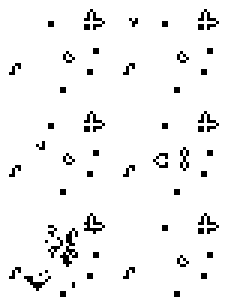
Photons can accrue a variety of tagalongs, allowing the creation of all sorts of spaceships, rakes and puffers. Here are some small ones attached to one photon or a domino pair:
Code: Select all
x = 31, y = 77, rule = TruePhoton-Life
8.A$8.AB7$26.2A$27.A7$7.2A18.2A$8.AB19.AB$7.2A20.AB$27.2A3$6.A17.A.A$
5.A2.A15.A.3A$8.AB19.AB$5.A2.A20.AB$24.A.3A$24.A.A3$8.A16.A$8.AB17.A$
7.2A18.2A$26.A2.AB$26.A2.AB$27.2A$27.A$25.A$6.A$5.4A$8.AB$5.4A$5.A9$A
$.A$2.A2.A2.A$2.2A.A2.AB$2.A2.A2.A$.A$A15$6.A$5.A2.A$4.A3.AB$5.A2.A$
6.A!
Sometimes we can find also shoots; here are a "snakebuilder" and "bunstacker":
Code: Select all
x = 15, y = 25, rule = TruePhoton-Life
14.B$8.2A4.B$8.2A4.B2$8.2A4.B$8.2A4.B$14.B11$4.A3.AB$2A.A.A.A2.B$.A.A
.A.A3.B$A2.2A3.A3.B$2A11.B$10.A3.B$9.A3.AB$10.A!
Also the singular ant could be plugged also into a stationary or moving end for the ants wick, creating a wickstretcher.
It might be possible to also discover "natural wicks" that are stretched by some arragement of photons; cf. tachyonic wicks below.
Another more interesting output is perhaps this natural B-wave breeder:
Code: Select all
x = 4, y = 4, rule = TruePhoton-Life
2A$2.AB$2.AB$.A!
---
Anyway, not to dwell on photons specifically too much just yet. We can also create a ruletable for
tachyons by adding extra states to the main part of the rule. The following encodes 2c orthogonal tachyons on Life: state 1 follows the Life rules but initially gives a quiescent state 2, which only in the next generation gives a live state 1. Meanwhile states 3/4/5 keep again moving at c, thus at 2c with respect to Life encoded by states 1/2. States 4/5 are distinguished so that tachyons will jump "over" live cells without harming them.
Code: Select all
@RULE TrueTachyon2co-Life
# eastward elementary tachyons at 2c plus Life

@TABLE
n_states:6
neighborhood:Moore
symmetries:none
var a={0,1,2,3,4,5}
var b={a}
var c={a}
var d={a}
var e={a}
var f={a}
var g={a}
var h={a}
var i={1,3}
var j={i}
var k={i}
# tachyon + quiescence superposition
a,i,j,0,0,0,0,3,0,5
a,i,0,j,0,0,0,3,0,5
a,i,0,0,j,0,0,3,0,5
a,i,0,0,0,j,0,3,0,5
a,i,0,0,0,0,j,3,0,5
a,i,0,0,0,0,0,3,k,5
a,0,i,j,0,0,0,3,0,5
a,0,i,0,j,0,0,3,0,5
a,0,i,0,0,j,0,3,0,5
a,0,i,0,0,0,j,3,0,5
a,0,i,0,0,0,0,3,k,5
a,0,0,i,j,0,0,3,0,5
a,0,0,i,0,j,0,3,0,5
a,0,0,i,0,0,j,3,0,5
a,0,0,i,0,0,0,3,k,5
a,0,0,0,i,j,0,3,0,5
a,0,0,0,i,0,j,3,0,5
a,0,0,0,i,0,0,3,k,5
a,0,0,0,0,i,j,3,0,5
a,0,0,0,0,i,0,3,k,5
a,0,0,0,0,0,i,3,k,5
i,j,0,0,0,0,0,3,0,5
i,0,j,0,0,0,0,3,0,5
i,0,0,j,0,0,0,3,0,5
i,0,0,0,j,0,0,3,0,5
i,0,0,0,0,j,0,3,0,5
i,0,0,0,0,0,j,3,0,5
i,0,0,0,0,0,0,3,k,5

# normal tachyon movement
a,b,c,d,e,f,g,3,h,4
a,b,c,d,e,f,g,4,h,3
a,b,c,d,e,f,g,5,h,3

# quiescence state
2,a,b,c,d,e,f,g,h,1
5,a,b,c,d,e,f,g,h,1

# b3, s3
a,i,j,k,0,0,0,0,0,2
a,i,j,0,k,0,0,0,0,2
a,i,j,0,0,k,0,0,0,2
a,i,j,0,0,0,k,0,0,2
a,i,j,0,0,0,0,k,0,2
a,i,j,0,0,0,0,0,k,2
a,i,0,j,k,0,0,0,0,2
a,i,0,j,0,k,0,0,0,2
a,i,0,j,0,0,k,0,0,2
a,i,0,j,0,0,0,k,0,2
a,i,0,j,0,0,0,0,k,2
a,i,0,0,j,k,0,0,0,2
a,i,0,0,j,0,k,0,0,2
a,i,0,0,j,0,0,k,0,2
a,i,0,0,j,0,0,0,k,2
a,i,0,0,0,j,k,0,0,2
a,i,0,0,0,j,0,k,0,2
a,i,0,0,0,j,0,0,k,2
a,i,0,0,0,0,j,k,0,2
a,i,0,0,0,0,j,0,k,2
a,i,0,0,0,0,0,j,k,2
a,0,i,j,k,0,0,0,0,2
a,0,i,j,0,k,0,0,0,2
a,0,i,j,0,0,k,0,0,2
a,0,i,j,0,0,0,k,0,2
a,0,i,j,0,0,0,0,k,2
a,0,i,0,j,k,0,0,0,2
a,0,i,0,j,0,k,0,0,2
a,0,i,0,j,0,0,k,0,2
a,0,i,0,j,0,0,0,k,2
a,0,i,0,0,j,k,0,0,2
a,0,i,0,0,j,0,k,0,2
a,0,i,0,0,j,0,0,k,2
a,0,i,0,0,0,j,k,0,2
a,0,i,0,0,0,j,0,k,2
a,0,i,0,0,0,0,j,k,2
a,0,0,i,j,k,0,0,0,2
a,0,0,i,j,0,k,0,0,2
a,0,0,i,j,0,0,k,0,2
a,0,0,i,j,0,0,0,k,2
a,0,0,i,0,j,k,0,0,2
a,0,0,i,0,j,0,k,0,2
a,0,0,i,0,j,0,0,k,2
a,0,0,i,0,0,j,k,0,2
a,0,0,i,0,0,j,0,k,2
a,0,0,i,0,0,0,j,k,2
a,0,0,0,i,j,k,0,0,2
a,0,0,0,i,j,0,k,0,2
a,0,0,0,i,j,0,0,k,2
a,0,0,0,i,0,j,k,0,2
a,0,0,0,i,0,j,0,k,2
a,0,0,0,i,0,0,j,k,2
a,0,0,0,0,i,j,k,0,2
a,0,0,0,0,i,j,0,k,2
a,0,0,0,0,i,0,j,k,2
a,0,0,0,0,0,i,j,k,2
# s2
i,j,k,0,0,0,0,0,0,2
i,j,0,k,0,0,0,0,0,2
i,j,0,0,k,0,0,0,0,2
i,j,0,0,0,k,0,0,0,2
i,j,0,0,0,0,k,0,0,2
i,j,0,0,0,0,0,k,0,2
i,j,0,0,0,0,0,0,k,2
i,0,j,k,0,0,0,0,0,2
i,0,j,0,k,0,0,0,0,2
i,0,j,0,0,k,0,0,0,2
i,0,j,0,0,0,k,0,0,2
i,0,j,0,0,0,0,k,0,2
i,0,j,0,0,0,0,0,k,2
i,0,0,j,k,0,0,0,0,2
i,0,0,j,0,k,0,0,0,2
i,0,0,j,0,0,k,0,0,2
i,0,0,j,0,0,0,k,0,2
i,0,0,j,0,0,0,0,k,2
i,0,0,0,j,k,0,0,0,2
i,0,0,0,j,0,k,0,0,2
i,0,0,0,j,0,0,k,0,2
i,0,0,0,j,0,0,0,k,2
i,0,0,0,0,j,k,0,0,2
i,0,0,0,0,j,0,k,0,2
i,0,0,0,0,j,0,0,k,2
i,0,0,0,0,0,j,k,0,2
i,0,0,0,0,0,j,0,k,2
i,0,0,0,0,0,0,j,k,2
# otherwise death
i,a,b,c,d,e,f,g,h,0
4,a,b,c,d,e,f,g,h,0

@COLORS
0 0 0 0
1 255 255 255
2 191 191 255
3 255 255 0
4 191 191 0
5 255 255 191
For obvious reasons, tachyons do not support tagalongs, and all their output are strictly puffers created by the tachyons themselves. Period-multiplication in the exhaust is not possible either (no reaction can reach far enough forward to prevent itself from occurring), thus all exhaust is p1 with respect to the tachyon engine. Such puffers seem to be effectively emulating a 2D CA of some sort within Life.
The 2c tachyon output in particular seems to often stabilize at a periodic pattern (= an oscillator in the emulated 2D CA), creating a peculiar p44 wick that I reported earlier in the unsure discoveries thread but which is maybe better posted in a dedicated topic here — though it
is a valid purely-Life pattern:
Tropylium wrote: October 11th, 2021, 1:25 pmCode: Select all
x = 87, y = 11, rule = B3/S23:T88,0
12bobobo$12bob6obo2bobo27bobobo$6bobo11bobobob4obo2bobo17bob6obo2bobo$
7b13obo2bo3bobobobob4o5bo2bobo11bobobob4obo2bobo$o4bobo3bo4bo9bobobobo
bo3bob3o3bobob12obo2bo3bobobobob4obo2bo$4o3bo3bo3bo8bobobobobobobobobo
bob4o3bo3bo3bo8bobobobobobobobobobo$2bobob12obo2bo3bobobobob4obo2bobo
4bobo3bo4bo9bobobobobo3bob3o$bo2bobo11bobobob4obo2bobo16b13obo2bo3bobo
bobob4o$10bob6obo2bobo25bobo11bobobob4obo2bobo$10bobobo41bob6obo2bobo$
56bobobo!
Generated by, for example, an L-tetromino of tachyons travelling in the direction of the trimino face.
The other two wick / waves posted there are similar outputs of 3c tachyons (for which I do not have a ruletable to go at this time).
Something interesting happens though when we implement "knight tachyons" at (2,1):
Code: Select all
@RULE TrueTachyon2cknight-Life
# east-by-northeast elementary tachyons at 2c plus Life

@TABLE
n_states:6
neighborhood:Moore
symmetries:none
var a={0,1,2,3,4,5}
var b={a}
var c={a}
var d={a}
var e={a}
var f={a}
var g={a}
var h={a}
var i={1,3}
var j={i}
var k={i}
# tachyon + quiescence superposition
a,i,j,0,0,0,0,3,0,5
a,i,0,j,0,0,0,3,0,5
a,i,0,0,j,0,0,3,0,5
a,i,0,0,0,j,0,3,0,5
a,i,0,0,0,0,j,3,0,5
a,i,0,0,0,0,0,3,k,5
a,0,i,j,0,0,0,3,0,5
a,0,i,0,j,0,0,3,0,5
a,0,i,0,0,j,0,3,0,5
a,0,i,0,0,0,j,3,0,5
a,0,i,0,0,0,0,3,k,5
a,0,0,i,j,0,0,3,0,5
a,0,0,i,0,j,0,3,0,5
a,0,0,i,0,0,j,3,0,5
a,0,0,i,0,0,0,3,k,5
a,0,0,0,i,j,0,3,0,5
a,0,0,0,i,0,j,3,0,5
a,0,0,0,i,0,0,3,k,5
a,0,0,0,0,i,j,3,0,5
a,0,0,0,0,i,0,3,k,5
a,0,0,0,0,0,i,3,k,5
i,j,0,0,0,0,0,3,0,5
i,0,j,0,0,0,0,3,0,5
i,0,0,j,0,0,0,3,0,5
i,0,0,0,j,0,0,3,0,5
i,0,0,0,0,j,0,3,0,5
i,0,0,0,0,0,j,3,0,5
i,0,0,0,0,0,0,3,k,5

# normal tachyon movement
a,b,c,d,e,f,g,3,h,4
a,b,c,d,e,f,4,g,h,3
a,b,c,d,e,f,5,g,h,3

# quiescence state
2,a,b,c,d,e,f,g,h,1
5,a,b,c,d,e,f,g,h,1

# b3, s3
a,i,j,k,0,0,0,0,0,2
a,i,j,0,k,0,0,0,0,2
a,i,j,0,0,k,0,0,0,2
a,i,j,0,0,0,k,0,0,2
a,i,j,0,0,0,0,k,0,2
a,i,j,0,0,0,0,0,k,2
a,i,0,j,k,0,0,0,0,2
a,i,0,j,0,k,0,0,0,2
a,i,0,j,0,0,k,0,0,2
a,i,0,j,0,0,0,k,0,2
a,i,0,j,0,0,0,0,k,2
a,i,0,0,j,k,0,0,0,2
a,i,0,0,j,0,k,0,0,2
a,i,0,0,j,0,0,k,0,2
a,i,0,0,j,0,0,0,k,2
a,i,0,0,0,j,k,0,0,2
a,i,0,0,0,j,0,k,0,2
a,i,0,0,0,j,0,0,k,2
a,i,0,0,0,0,j,k,0,2
a,i,0,0,0,0,j,0,k,2
a,i,0,0,0,0,0,j,k,2
a,0,i,j,k,0,0,0,0,2
a,0,i,j,0,k,0,0,0,2
a,0,i,j,0,0,k,0,0,2
a,0,i,j,0,0,0,k,0,2
a,0,i,j,0,0,0,0,k,2
a,0,i,0,j,k,0,0,0,2
a,0,i,0,j,0,k,0,0,2
a,0,i,0,j,0,0,k,0,2
a,0,i,0,j,0,0,0,k,2
a,0,i,0,0,j,k,0,0,2
a,0,i,0,0,j,0,k,0,2
a,0,i,0,0,j,0,0,k,2
a,0,i,0,0,0,j,k,0,2
a,0,i,0,0,0,j,0,k,2
a,0,i,0,0,0,0,j,k,2
a,0,0,i,j,k,0,0,0,2
a,0,0,i,j,0,k,0,0,2
a,0,0,i,j,0,0,k,0,2
a,0,0,i,j,0,0,0,k,2
a,0,0,i,0,j,k,0,0,2
a,0,0,i,0,j,0,k,0,2
a,0,0,i,0,j,0,0,k,2
a,0,0,i,0,0,j,k,0,2
a,0,0,i,0,0,j,0,k,2
a,0,0,i,0,0,0,j,k,2
a,0,0,0,i,j,k,0,0,2
a,0,0,0,i,j,0,k,0,2
a,0,0,0,i,j,0,0,k,2
a,0,0,0,i,0,j,k,0,2
a,0,0,0,i,0,j,0,k,2
a,0,0,0,i,0,0,j,k,2
a,0,0,0,0,i,j,k,0,2
a,0,0,0,0,i,j,0,k,2
a,0,0,0,0,i,0,j,k,2
a,0,0,0,0,0,i,j,k,2
# s2
i,j,k,0,0,0,0,0,0,2
i,j,0,k,0,0,0,0,0,2
i,j,0,0,k,0,0,0,0,2
i,j,0,0,0,k,0,0,0,2
i,j,0,0,0,0,k,0,0,2
i,j,0,0,0,0,0,k,0,2
i,j,0,0,0,0,0,0,k,2
i,0,j,k,0,0,0,0,0,2
i,0,j,0,k,0,0,0,0,2
i,0,j,0,0,k,0,0,0,2
i,0,j,0,0,0,k,0,0,2
i,0,j,0,0,0,0,k,0,2
i,0,j,0,0,0,0,0,k,2
i,0,0,j,k,0,0,0,0,2
i,0,0,j,0,k,0,0,0,2
i,0,0,j,0,0,k,0,0,2
i,0,0,j,0,0,0,k,0,2
i,0,0,j,0,0,0,0,k,2
i,0,0,0,j,k,0,0,0,2
i,0,0,0,j,0,k,0,0,2
i,0,0,0,j,0,0,k,0,2
i,0,0,0,j,0,0,0,k,2
i,0,0,0,0,j,k,0,0,2
i,0,0,0,0,j,0,k,0,2
i,0,0,0,0,j,0,0,k,2
i,0,0,0,0,0,j,k,0,2
i,0,0,0,0,0,j,0,k,2
i,0,0,0,0,0,0,j,k,2
# otherwise death
i,a,b,c,d,e,f,g,h,0
4,a,b,c,d,e,f,g,h,0

@COLORS
0 0 0 0
1 255 255 255
2 191 191 255
3 255 255 0
4 191 191 0
5 255 255 191
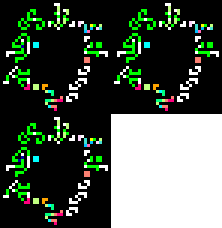
Namely, similar "emulated 2D CA puffers" results as with 2c orthogonal tachyons… however the 2D CA is chaotic, creating in most cases not wicks but impressive reticulated patterns (again, purely made out of Life cells):
Code: Select all
x = 3, y = 2, rule = TrueTachyon2cknight-Life
2C$2.C!
There are still a few plainer spaceship / wickstretcher patterns as well though.
Code: Select all
x = 28, y = 10, rule = TrueTachyon2cknight-Life
25.C$26.C$26.C4$2C$2.C23.C$3.3C20.C$27.C!



 )