confocaloid wrote: January 8th, 2025, 5:12 pm
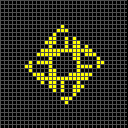
The main problem I see is that the title "p124 lumps of muck hassler" incorrectly suggests that the page is about period-124 LoM hasslers in general (any period-124 oscillators that are also LoM hasslers)...
Can you explain a little more why "p124 lumps of muck hassler" suggests multiple hasslers? It doesn't suggest that to me. It's more like, it's possible that that article might show a collection of different hasslers, but it's also possible that there's only one such hassler shown, and its name is "p124 lumps of muck hassler".
To find out which possibility is actually the case, you have to go take a quick look at the article. But all things considered, that doesn't seem to be much of a hardship for anyone.
It seems like there might be a standard developing for this kind of thing -- where if the article's name were "p124 lumps of muck hasslers", then you would know that it's a collection page for multiple hasslers of that type. See pi-heptomino hasslers and so on. But if there's no "s" on the end of the title, why is there an implication of multiplicity?
confocaloid wrote: January 8th, 2025, 5:12 pm
The main problem I see is that the title "p124 lumps of muck hassler" incorrectly suggests that the page is about period-124 LoM hasslers in general (any period-124 oscillators that are also LoM hasslers)...
Can you explain a little more why "p124 lumps of muck hassler" suggests multiple hasslers? [...]
The reason is because it's an incomplete description, rather than a pattern name.
The speed tunnel, for example, is a specific component (modulo catalyst variants). Likewise, the dart is a specific object.
However, "p124 lumps of muck hassler" is just a description. There can be many different, unrelated, oscillators of the same type.
When some text about CGoL spaceships says "the dart", it is safe to assume that it refers to the dart.
However, when some text says "p124 lumps of muck hassler", there is no implication which particular example is meant.
Last edited by confocaloid on January 8th, 2025, 8:02 pm, edited 2 times in total.
127:1 B3/S234cUser:Confocal/R (isotropic CA, incomplete)
Unlikely events happen.
My silence does not imply agreement, nor indifference. If I disagreed with something in the past, then please do not construe my silence as something that could change that.
x = 22, y = 14, rule = B3/S23
18bo$17b2o$b2o13b2o$b2o14b2o4$6b2o3b2o$2b2o2b2o3b2o5b2o$bobo14bo$bo12b
2o3b3o$2o12bo6bo$15b3o$17bo!
127:1 B3/S234cUser:Confocal/R (isotropic CA, incomplete)
Unlikely events happen.
My silence does not imply agreement, nor indifference. If I disagreed with something in the past, then please do not construe my silence as something that could change that.
x = 51, y = 48, rule = B3/S23
27bo$26bobo7bo$26bobo5b3o$24b2o2b2o3bo$23bo2b2o5b2o$23b3o3b4obo$26b2o
2bo2bo$25bo3bo$20bo4bobobo$20b3o$23bo2b3o$22b2o12b2o$13b2o21bo$14bo19b
obo$14bobo12bo4b2o$3b2o10b2o11b3o11b2o$2bo2bobo14bobo2bob3o10b2o$o2bo
bob3o13bo2b3o2b2o$4bo5bo16b2o2bo11bo$ob2o5b2o17bob2o10bobo$bo27b2o10b
o3bo$41bo3bo$41b2ob2o$23b2ob2o$23b2ob2o$5b2ob2o$5bo3bo$5bo3bo10b2o27b
o$6bobo10b2obo17b2o5b2obo$7bo11bo2b2o16bo5bo$18b2o2b3o2bo13b3obobo2bo
$7b2o10b3obo2bobo14bobo2bo$7b2o11b3o11b2o10b2o$15b2o4bo12bobo$14bobo19b
o$14bo21b2o$13b2o12b2o$22b3o2bo$28b3o$21bobobo4bo$21bo3bo$17bo2bo2b2o
$16bob4o3b3o$16b2o5b2o2bo$17bo3b2o2b2o$14b3o5bobo$14bo7bobo$23bo!
Last edited by WhiteHawk on January 9th, 2025, 7:37 pm, edited 1 time in total.
Currently working to improve Life's guns and work on updating SKOPs and Isotropic rules most similar to B3/S23 to Life standards. Will get software to begin searches eventually.
x = 51, y = 48, rule = B3/S23
27bo$26bobo7bo$26bobo5b3o$24b2o2b2o3bo$23bo2b2o5b2o$23b3o3b4obo$26b2o
2bo2bo$25bo3bo$20bo4bobobo$20b3o$23bo2b3o$22b2o12b2o$13b2o21bo$14bo19b
obo$14bobo12bo4b2o$3b2o10b2o11b3o11b2o$2bo2bobo14bobo2bob3o10b2o$o2bo
bob3o13bo2b3o2b2o$4bo5bo16b2o2bo11bo$ob2o5b2o17bob2o10bobo$bo27b2o10b
o3bo$41bo3bo$41b2ob2o$23b2ob2o$23b2ob2o$5b2ob2o$5bo3bo$5bo3bo10b2o27b
o$6bobo10b2obo17b2o5b2obo$7bo11bo2b2o16bo5bo$18b2o2b3o2bo13b3obobo2bo
$7b2o10b3obo2bobo14bobo2bo$7b2o11b3o11b2o10b2o$15b2o4bo12bobo$14bobo19b
o$14bo21b2o$13b2o12b2o$22b3o2bo$28b3o$21bobobo4bo$21bo3bo$17bo2bo2b2o
$16bob4o3b3o$16b2o5b2o2bo$17bo3b2o2b2o$14b3o5bobo$14bo7bobo$23bo!
Again, it would be helpful if you provided more information about the source from which you obtained this oscillator. Without that, it becomes harder to recover sources of interesting things.
In this case, there happened to be a recent short discussion about the same question. It doesn't really answer who and when discovered the p72 oscillator, but it does provide some additional information about it.
confocaloid wrote: December 25th, 2024, 2:31 pm
I did not find discovery information for the p72 hassler involved in a few recent posts above and in the p360 gliderless HWSS gun by KtT, is this oscillator new? Where it comes from?
127:1 B3/S234cUser:Confocal/R (isotropic CA, incomplete)
Unlikely events happen.
My silence does not imply agreement, nor indifference. If I disagreed with something in the past, then please do not construe my silence as something that could change that.
Yes, you did understand correctly. However, I was hoping for a westward output (relative to the current orientation), rather than an eastward output.
EDIT: I don't need this anymore.
Last edited by ElijahKen on February 5th, 2025, 7:59 pm, edited 1 time in total.
WhiteHawk wrote: November 21st, 2024, 12:11 am
Previously updated to the SKOP table in 2024, but never mentioned here: SKOP142 at 125 cells, which gives p131 rectifier loop as the highest-period SKOP with a minimum population greater than it's period.
On the fleet hasslers page, it says "A period-10 hassler also exists, however where and when it was posted is unknown".
What is the p10 fleet hassler?
EDIT: It is linked to a reference post, but I don't have Discord to review it.
Last edited by WhiteHawk on January 22nd, 2025, 12:06 pm, edited 1 time in total.
Currently working to improve Life's guns and work on updating SKOPs and Isotropic rules most similar to B3/S23 to Life standards. Will get software to begin searches eventually.
WhiteHawk wrote: January 22nd, 2025, 11:57 am
On the Fleet Hasslers page, it says "A period-10 hassler also exists, however where and when it was posted is unknown".
What is the p10 fleet hassler?
I don't remember seeing any pattern at all.
If nobody knows the actual pattern, then the claim cannot be substantiated and should be deleted from the wiki page. It can be removed right now, until someone finds an actual pattern.
if there's a pattern behind the "Discord wall" then someone should post it in a publicly accessible place with a reference. Otherwise, it is possible that there was no actual pattern to begin with.
127:1 B3/S234cUser:Confocal/R (isotropic CA, incomplete)
Unlikely events happen.
My silence does not imply agreement, nor indifference. If I disagreed with something in the past, then please do not construe my silence as something that could change that.
Just extremely curious: If the metric for smallest gun was population from the start, how would the list of smallest guns look like?
~ Haycat Durnak, a hard-working editor
Also, support Conway and Friends story mode!
I mean no harm to those who have tested me. But do not take this for granted.
Haycat2009 wrote: January 25th, 2025, 12:34 am
Just extremely curious: If the metric for smallest gun was population from the start, how would the list of smallest guns look like?
And vice versa: if the metric for smallest known oscillator of each periods was bounding box from the start, how would the table of SKOPs would look like?
What if the metric for smallest known oscillators was the MCPS of the envelope, with ties broken by preferring a smaller stator?
For glider guns, the population metric would lead to very boring "glider duplicator + glider loop" guns for the majority of high periods. Arguably, it's objectively more interesting to use the bounding box area metric, because that leaves more chances to use various tricks and gadgets for different gun periods.
Sometimes it's also useful to consider the "diagonal bounding box width" of a glider gun, because the most common sort of spaceship (the glider) travels diagonally, and the corresponding sorts of clearance may be important. In some contexts, a "long diagonally-thin gun" may beat a compact-but-not-so-diagonally-thin one.
127:1 B3/S234cUser:Confocal/R (isotropic CA, incomplete)
Unlikely events happen.
My silence does not imply agreement, nor indifference. If I disagreed with something in the past, then please do not construe my silence as something that could change that.
KtT wrote: January 25th, 2025, 10:20 am
How should this pattern be categorized?
This pattern uses 3 copies of c/12d backward glider rake to synthesize MWSS every 128 generations.
Probably I would refuse the temptation to assign this pattern into any specific category. I think a full-length multiword description (like the one you provided) works better for most nontrivially engineered patterns.
It is neither a gun (it fails to "repeat save for the output MWSS"), neither a rake (it fails to "repeat translated save for the output MWSS").
However, someone looking only at sufficiently small region surrounding the repeating collisions could incorrectly assume that the entire pattern (mostly invisible to them) is a p128 MWSS gun; apparently there are three p128 glider streams colliding to create a p128 MWSS stream, those streams appear to be regular, maybe they come from glider guns and the entire pattern is a MWSS gun? But no:
127:1 B3/S234cUser:Confocal/R (isotropic CA, incomplete)
Unlikely events happen.
My silence does not imply agreement, nor indifference. If I disagreed with something in the past, then please do not construe my silence as something that could change that.
Tawal wrote: January 26th, 2025, 10:51 am
But is there a periodic Highway Robber that works whatever the timing of the Glider ?
There is almost certainly no known example. Nearly all periodic circuitry is sensitive to the period of the incoming glider, and as far as I know, there are no useful examples in CGOL.
In theory, one could take a highway robber with period N, and arrange N copies, each offset by one generation, so that an incoming glider will be caught by the highway robber with the right phase. Then, the N outputs could by set to release a glider on a single lane, so that the output timing matches the input. However, I also don't think there exists any periodic highway robber which could be arranged like this.
silversmith wrote: January 28th, 2025, 9:09 am
However, I also don't think there exists any periodic highway robber which could be arranged like this.
We could probably put together a design that would work for any chosen percentage of possible input glider timings, but strictly less than 100%.
I don't know for sure that there's a dying spark that could be dropped in front of a glider, with just one cell impinging on the glider lane in one generation and then dying off, that would produce a perpendicular output signal if the glider is there but otherwise just disappear harmlessly. But it seems fairly likely, and that's maybe the closest we can get to 100% coverage with a periodic solution.
(With the right ordering of the N copies and a high enough N, things can be arranged so that any glider that would interact with that spark at the wrong time, would already have been caught by a previous copy ... except for about a dozen possible glider timings where the required "previous copy" would be before the beginning of the highway robber chain, so it can't be there to do the catching.)
If a pattern is referred commonly, it would need a short and simple name. If you would give every patterns a unique name, eventually there would be names for all objects that are never referred. Only name patterns that is really common or frequently referred. Due to this reason I only named a few patterns in only a few of my rules - sometimes using the same name for different but similar things in different rules.
If you really need to name a pattern, it best not to take an existing terminology (or similar names) as it's name. For example you won't call an oscillator as "flipper" - that name would be confused with some existing terminologies.
Quoting this post because it would be helpful for this explanation:
confocaloid wrote: January 25th, 2025, 9:51 am
...
Other than "because those patterns exist", why they need any names at all?
If you need a natural-language phrase to refer to those objects in some text (explanation, description of a bigger pattern), then I guess you could invent names, explain what each name refers to, and then use those names in the explanation (hopefully consistently).
However, your suggestions 'flip-flop' and 'spinner' sound much more like terms referring to some general concepts, rather than names referring to specific things. (Why this particular oscillator, in this particular CA, needs to be named 'spinner' or 'flip-flop'?)
Traditionally the discoverer of a notable object, reaction, component, pattern has the right to choose name for their discovery. However, many discovered objects, reactions, components, patterns remain unnamed (or named in a technical/systematic way), simply because they don't need any non-systematic names.
What is the smallest c/2 ship by population with a constant population?
EDIT:
b-engine wrote: January 29th, 2025, 10:40 am
Since you didn't specify the rulespace,
I meant in standard life
Last edited by WhiteHawk on January 29th, 2025, 10:43 am, edited 3 times in total.
Currently working to improve Life's guns and work on updating SKOPs and Isotropic rules most similar to B3/S23 to Life standards. Will get software to begin searches eventually.
WhiteHawk wrote: January 29th, 2025, 9:52 am
What is the smallest c/2 ship by population with a constant population?
Since you didn't specify the rulespace, I assume that RuleLoader rules could count - the smallest c/2 spaceship wuth constant population would have 1 cell (3-state anisotropic rules) or 2 cells (4-state isotropic rules).
EDIT:
Since you specified standard Life, one could trivially make two copies of a c/2 spaceship with different parity: