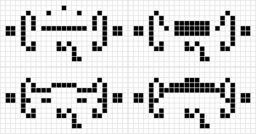
As far as I know, oscillators with periods
other than 4n are rare. Some p4n+2:
Code: Select all
x = 248, y = 34, rule = Langtons-Ant
3A17.3A18.A2.3A14.A2.3A13.3A.3A13.3A.3A13.3A.3A13.3A.A.A13.3A.3A13.3A
.A.A13.3A.3A13.3A.3A13.3A.3A$2.A17.A19.2A2.A.A13.2A2.A.A15.A3.A15.A.A
17.A.A.A15.A.A.A13.A3.A.A13.A3.A.A13.A5.A15.A.A.A13.A.A3.A$3A17.3A18.
A2.A.A14.A2.3A13.3A.3A13.3A.3A13.3A.A.A13.3A.3A13.3A.A.A13.3A.3A13.3A
.3A15.A.3A13.3A.3A$A19.A.A18.A2.A.A14.A2.A.A13.A3.A15.A3.A.A15.A.A.A
15.A3.A15.A.A.A15.A3.A13.A.A.A17.A.A.A13.A.A.A$3A17.3A17.3A.3A13.3A.
3A13.3A.3A13.3A.3A13.3A.3A13.3A3.A13.3A.3A13.3A3.A13.3A.3A15.A.3A13.
3A.3A6$BF20.A39.A18.AC39.I20.2A36.AF18.4A35.2AB$HD18.AGE37.A2H18.AI
37.IA.C18.2A.3A14.B17.2AD.A19.A35.AH2.2A$21.CIA16.EGA17.2AHD19.C36.A.
AE.A15.A.AC.AG13.A.A2F14.3AB16.AE3A35.A2.B.A.A$21.A20.EC39.C18.2I18.
4A16.G.AE15.A3.D14.A2.HA.A13.AEA.E35.2A3.2A$83.2A16.2C21.2A36.4A14.A.
A.3A17.G38.A.A$101.A60.A18.2A40.HFA18.H3A$162.A60.H2A$224.A$224.F2$
22.A39.2A78.2A$20.2IA17.2I.A16.AGE20.B56.2AB.AF$20.2E18.A.2G16.AEG20.
DF56.A.AH36.2A.2A$21.A61.AD58.A$143.D39.BA$183.DFA$184.H4$82.AF$81.BF
$80.HA.A$81.3A!
p3 oscillators are impossible. Proof:
Let the cell (x,y) be the left boundary of the upper layer of p3 oscillator (group of black cells is not a part of oscillator):
Code:
Select all
x = 22, y = 21, rule = Langtons-Ant

11.A.A$12.A$11.A.A$19.A$12.A6.2A$5.17A$5.A13.2A$5.A.10A2.A$5.A.10A$5.

A.10A$5.A.10A$5.A.10A$5.A.10A$5.A.10A$A.A2.A.10A$.A2.2A.5AB$.A3.A$5.A

$3.5A$4.3A$5.A!
If this cell is part of oscillator, then ant must pass through it. According to the law of parity, two ants will pass through every cell of p3 oscillator.
In order to turn cell (x,y) off, cell (x+1,y) must contain Ub (Up+black = state 6) ant.
In order to turn cell (x,y) on, cell (x,y+1) must contain Lw or Rb ant.
Let (x+1,y,0) = Ub:
Code:
Select all
x = 22, y = 21, rule = Langtons-Ant

11.A.A$12.A$11.A.A$19.A$12.A6.2A$5.17A$5.A13.2A$5.A.10A2.A$5.A.10A$5.

A.10A$5.A.10A$5.A.10A$5.A.10A$5.A.10A$A.A2.A.10A$.A2.2A.6AF$.A3.A$5.A

$3.5A$4.3A$5.A!
So (x,y,1) = Lb. Cell (x,y) must have state Uw too (2nd ant). Consider two cases:
Case 1: (x,y,0) = Uw
(x,y+1,2) = Dw (or Db) due to (x+1,y,0) = Ub, so (x,y,3) != Uw. But (x,y,0) = (x,y,3) due to period 3. Case 1 is invalid.
Case 2: (x,y,2) = Uw
Then (x+1,y,3) = Rw, and (x+1,y+1,0) = (x+1,y,3), or Ub = Rw. Case 2 is invalid.
Both cases are invalid, so p3 oscillators can't exist in Langtons-Ant. Q.E.D.
Corollary: Langtons-Ant is not omniperiodic.